
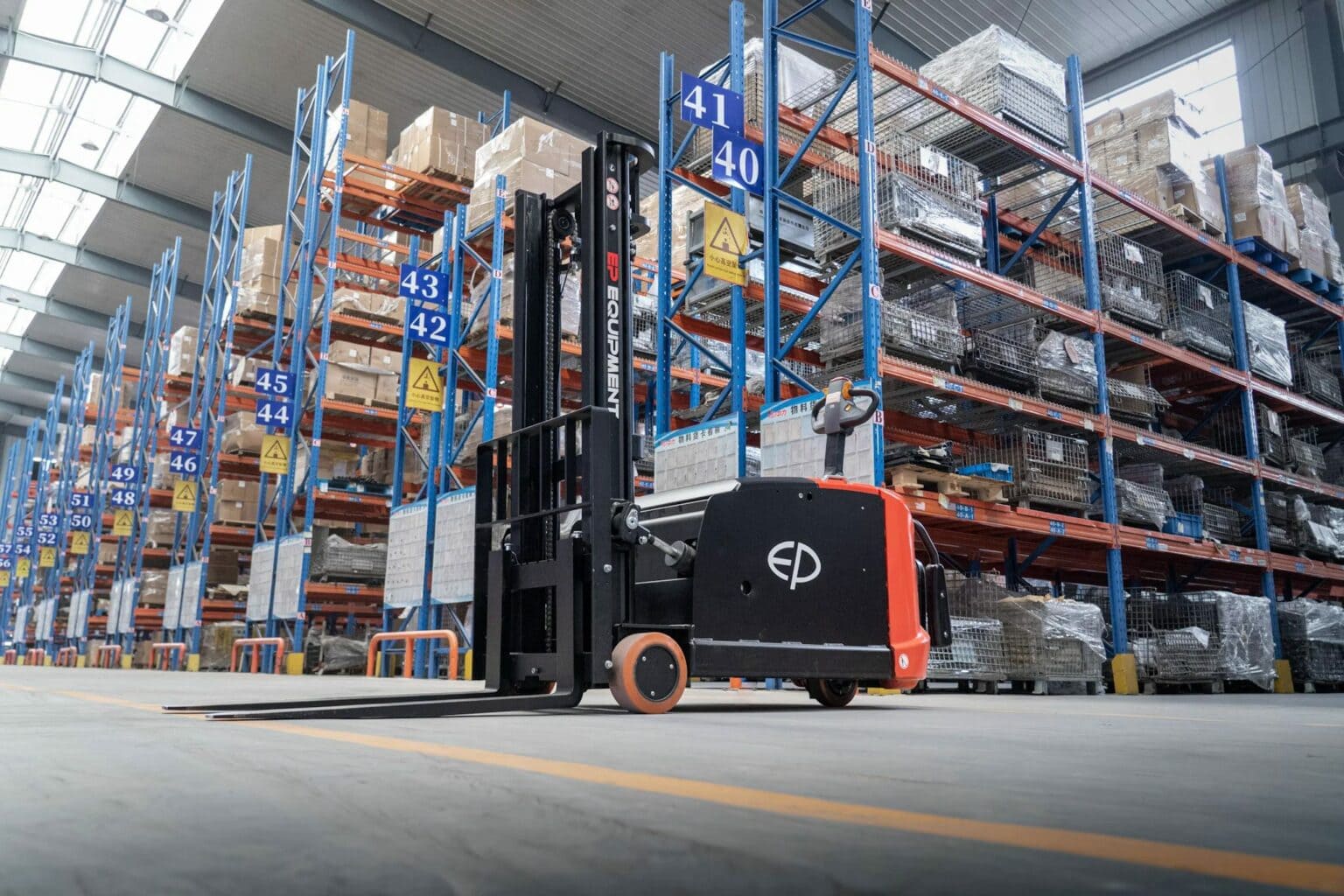
Electric stackers up to 5.5 m
26 EP stackers from 0.8 to 2 tonnes, in less space than a forklift.
Your racking, your pallets, your doors
Three things decide which stacker you need: the pallets you use, how high your top beam is, and the lowest door or mezzanine it has to drive under. Set yours and see which EP stackers fit.
All 26 EP stackers
Every model is for sale or on contract hire, grouped by type: scroll each row sideways. The DS3 is in stock with a price; the rest are ordered new from the EP factory for you, so ask for a price and a delivery date.
Walk-behind Support legs under the pallet. For stock rooms and racking up to 5.5 m.
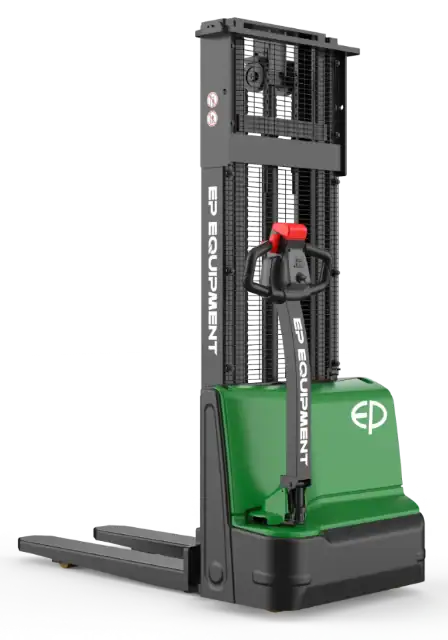
DS3
Compact walk-behind for back rooms and stores
- Capacity
- 1,500 kg
- Lifts to
- 3,018 mm
- Mast lowered
- 2,067 mm
- Battery
- 24V 80Ah AGM or 40Ah lithium
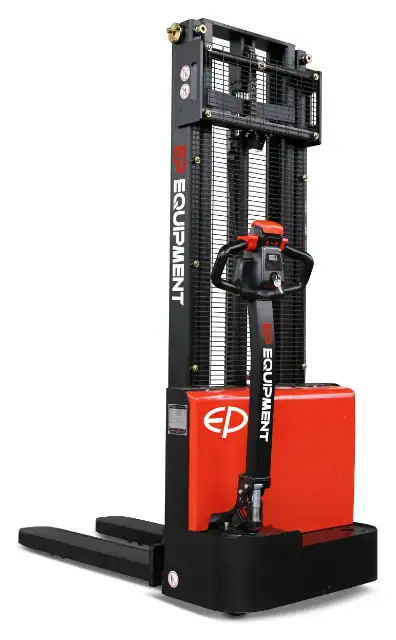
EST122
Entry walk-behind
- Capacity
- 1,200 kg
- Lifts to
- 3,013 mm
- Mast lowered
- 2,104 mm
- Battery
- 24V 85Ah AGM
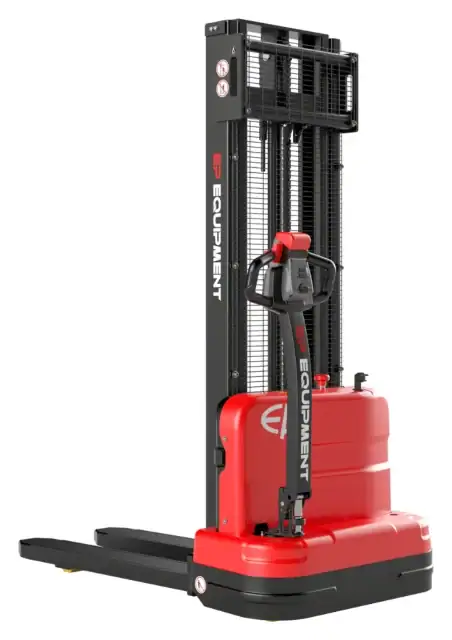
EST124
Entry walk-behind, wider chassis
- Capacity
- 1,200 kg
- Lifts to
- 3,013 mm
- Mast lowered
- 2,067 mm
- Battery
- 24V 80Ah AGM
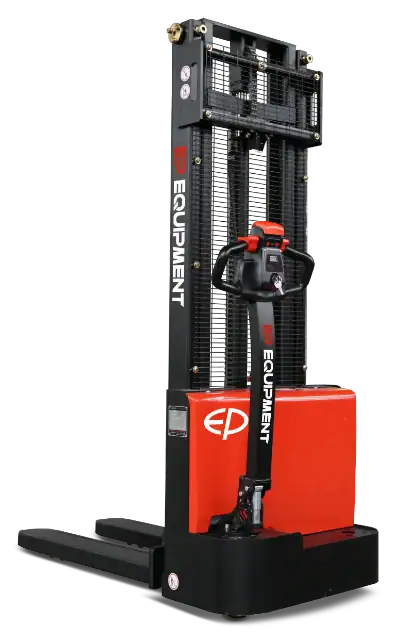
ESL122
Entry walk-behind on lithium
- Capacity
- 1,200 kg
- Lifts to
- 3,013 mm
- Mast lowered
- 2,104 mm
- Battery
- 24V 100Ah lithium
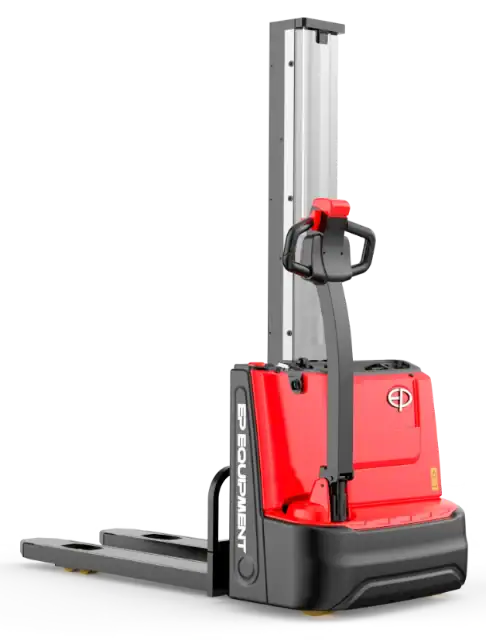
ESA121-M
Mono mast, for low stacking and benches
- Capacity
- 1,200 kg
- Lifts to
- 1,953 mm
- Mast lowered
- 1,951 mm
- Battery
- 24V 105Ah
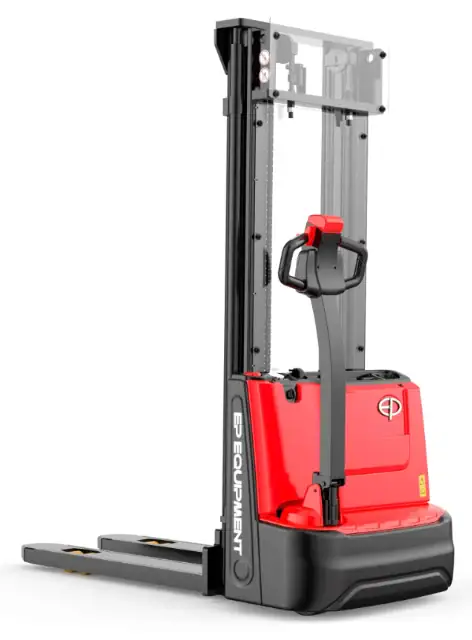
ESA121 Duplex
Duplex mast to 4.1 m
- Capacity
- 1,200 kg
- Lifts to
- 4,113 mm
- Mast lowered
- 1,995 mm
- Battery
- 24V 105Ah AGM
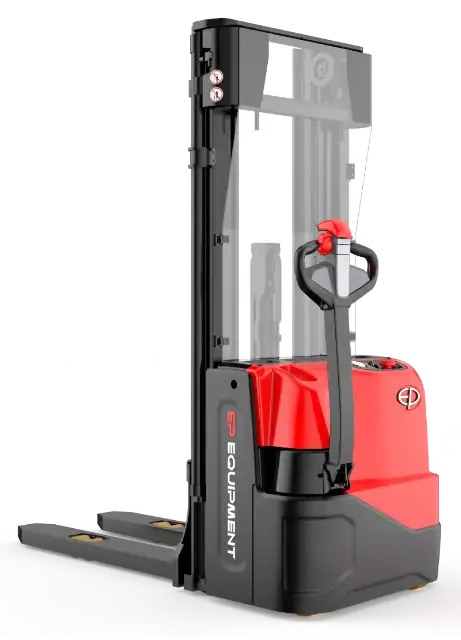
WSA121
Heavy-duty, to 4.8 m
- Capacity
- 1,200 kg
- Lifts to
- 4,800 mm
- Mast lowered
- 1,970 mm
- Battery
- 24V 100Ah lithium
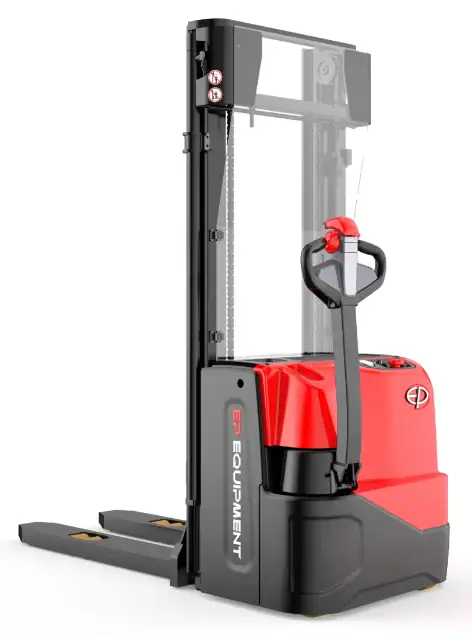
WSA161
Heavy-duty, 1.6 t to 5.5 m
- Capacity
- 1,600 kg
- Lifts to
- 5,500 mm
- Mast lowered
- 2,015 mm
- Battery
- 24V 100Ah lithium
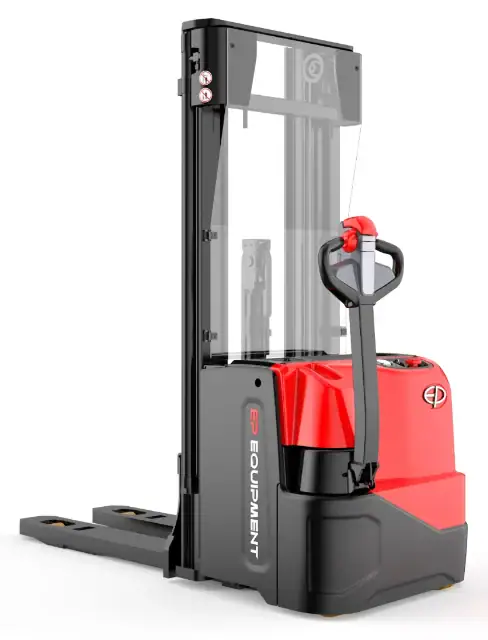
WSA161I
Heavy-duty with initial lift
- Capacity
- 1,600 kg on the mast
- Lifts to
- 3,000 mm
- Mast lowered
- 2,015 mm
- Battery
- 24V 100Ah
Straddle legs Legs either side of the pallet, for closed-bottom and wide pallets.
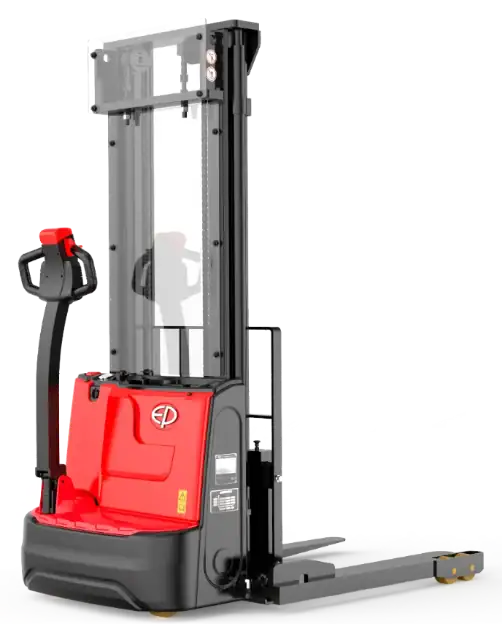
ESA121-D
Straddle legs, to 4.1 m
- Capacity
- 1,200 kg
- Lifts to
- 4,080 mm
- Mast lowered
- 2,425 mm
- Battery
- 24V 105Ah
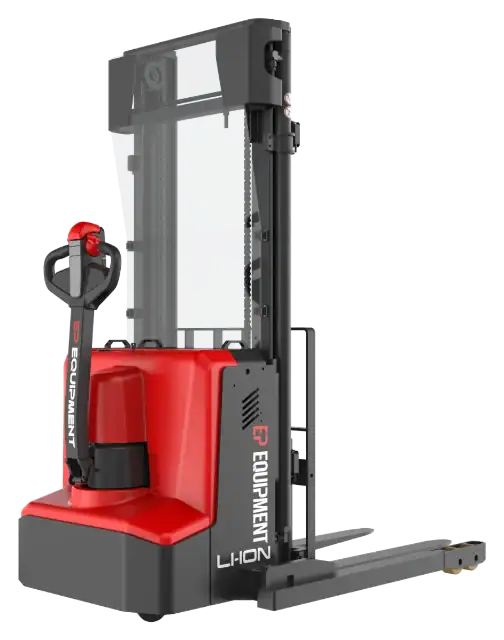
WSA121-D
Straddle legs, to 5.5 m
- Capacity
- 1,200 kg
- Lifts to
- 5,500 mm
- Mast lowered
- 2,025 mm
- Battery
- 24V 100Ah lithium
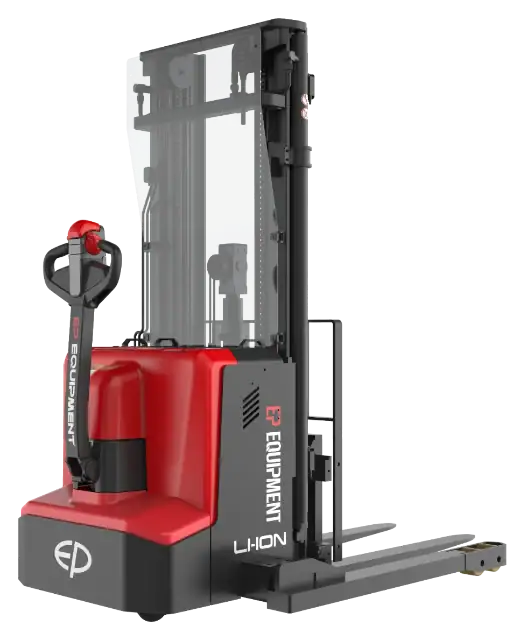
WSA161-D
Straddle legs, 1.6 t to 5.5 m
- Capacity
- 1,600 kg
- Lifts to
- 5,500 mm
- Mast lowered
- 2,025 mm
- Battery
- 24V 205Ah lithium
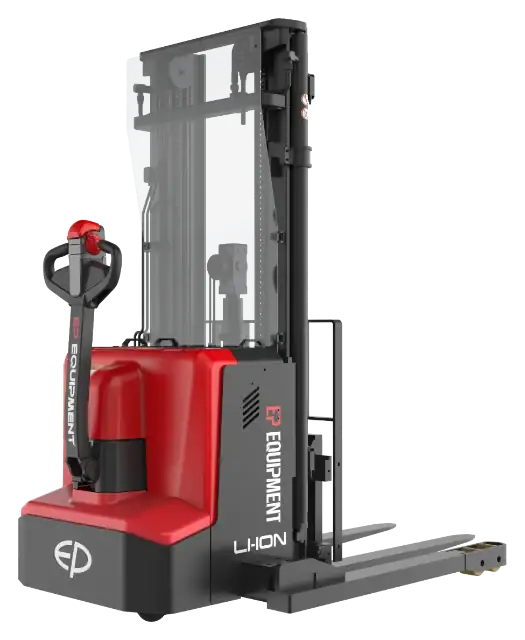
WSA181-D
Straddle legs, 1.8 t to 5.5 m
- Capacity
- 1,800 kg
- Lifts to
- 5,500 mm
- Mast lowered
- 2,025 mm
- Battery
- 24V 205Ah lithium
Platform and stand-on The operator rides, for longer runs between dock and racking.
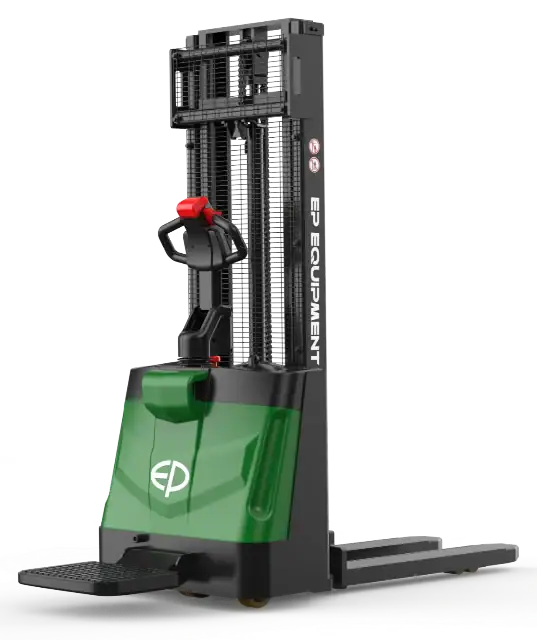
ESR151
Stand-on, for longer runs
- Capacity
- 1,500 kg
- Lifts to
- 3,013 mm
- Mast lowered
- 2,067 mm
- Battery
- 24V 105Ah AGM
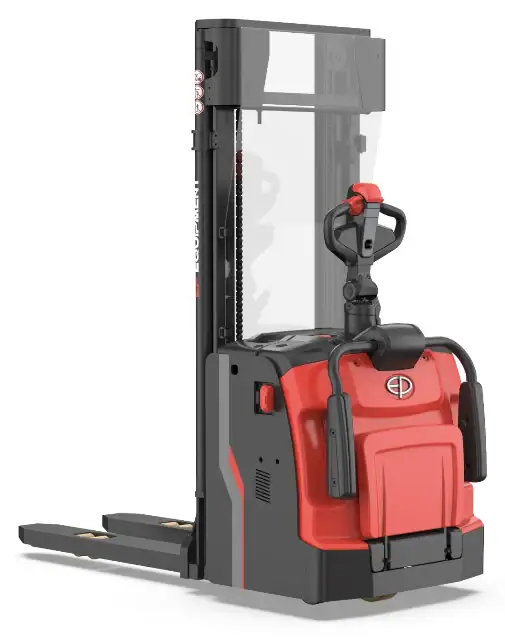
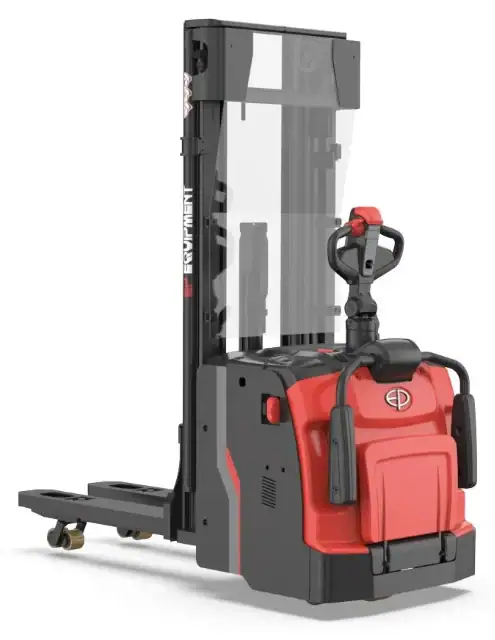
RSL16 PRO
Fold-down platform, 9 km/h laden
- Capacity
- 1,600 kg
- Lifts to
- 3,000 mm
- Mast lowered
- 2,015 mm
- Battery
- 24V 205Ah lithium
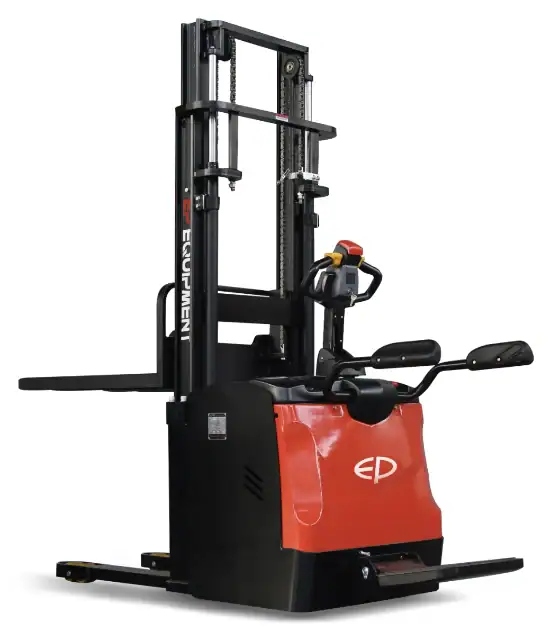
RSL16I PRO
Fold-down platform with initial lift
- Capacity
- 1,600 kg on the mast
- Lifts to
- 3,000 mm
- Mast lowered
- 2,015 mm
- Battery
- 24V 205Ah
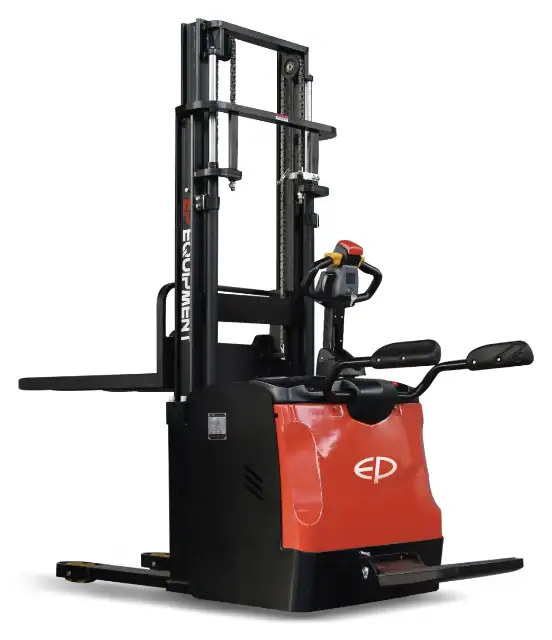
ES16-RS
Side-stand platform
- Capacity
- 1,600 kg
- Lifts to
- 3,000 mm
- Mast lowered
- 2,020 mm
- Battery
- 24V 210Ah, lead-acid or lithium
ES16-RSI
Side-stand platform with initial lift
- Capacity
- 1,600 kg on the mast
- Lifts to
- 3,000 mm
- Mast lowered
- 2,020 mm
- Battery
- 24V 280Ah lead-acid
Counterbalance No legs at all, like a small forklift. Any pallet.
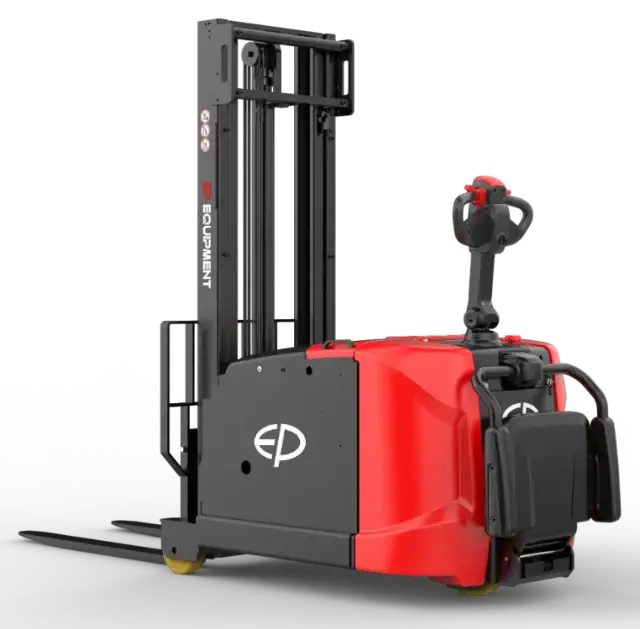
RSC082
No legs, 800 kg
- Capacity
- 800 kg
- Lifts to
- 3,000 mm
- Mast lowered
- 2,061 mm
- Battery
- 24V 210Ah, lead-acid or lithium
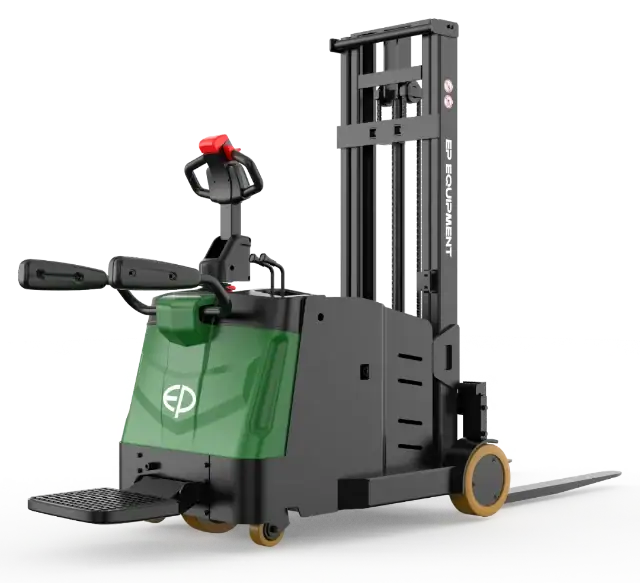
RSC101
No legs, to 3.6 m
- Capacity
- 1,000 kg
- Lifts to
- 3,580 mm
- Mast lowered
- 1,835 mm
- Battery
- 48V 85Ah lead-acid
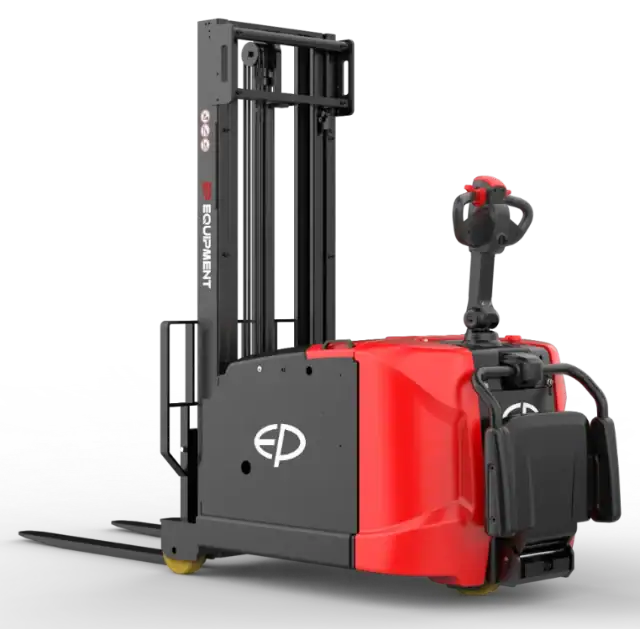
RSC122
No legs, 1.2 t
- Capacity
- 1,200 kg
- Lifts to
- 3,000 mm
- Mast lowered
- 2,061 mm
- Battery
- 24V 210Ah, lead-acid or lithium
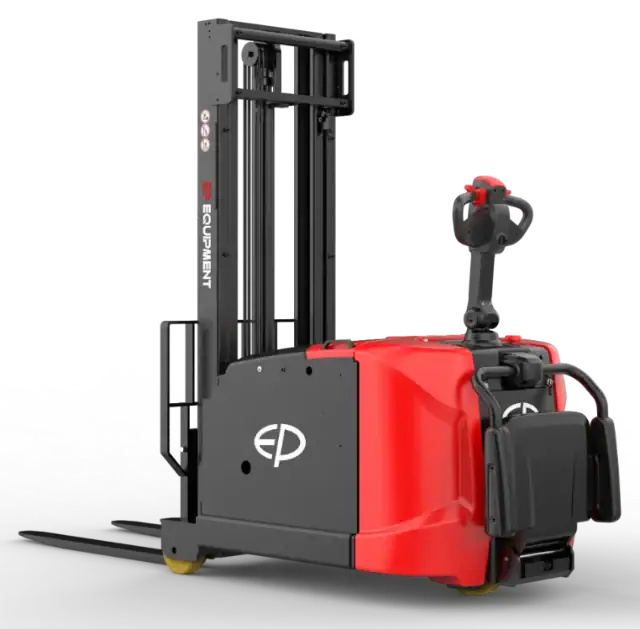
RSC152
No legs, 1.5 t
- Capacity
- 1,500 kg
- Lifts to
- 3,000 mm
- Mast lowered
- 2,018 mm
- Battery
- 24V 210Ah, lead-acid or lithium
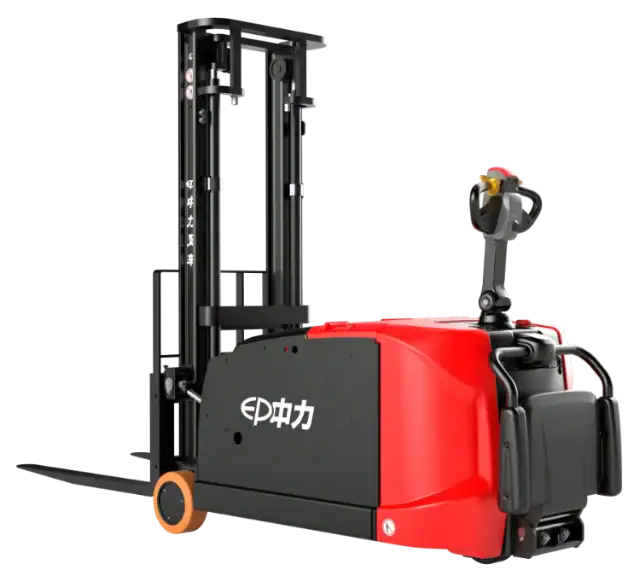
RSC202
No legs, 2 t
- Capacity
- 2,000 kg
- Lifts to
- 3,000 mm
- Mast lowered
- 2,018 mm
- Battery
- 24V 210Ah, lead-acid or lithium
Double-deck Carry two pallets at once on the legs and forks.
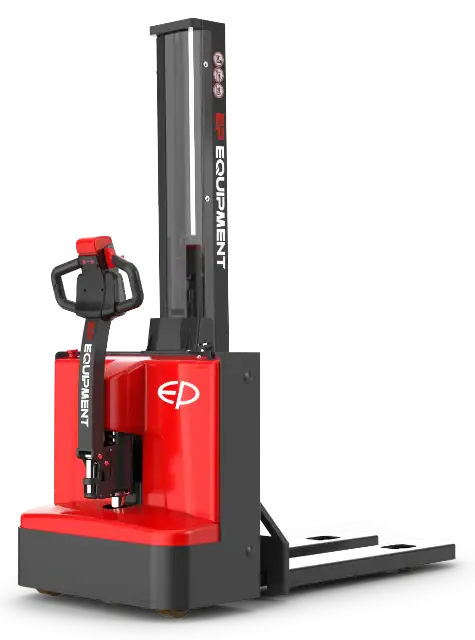
ESI161
Moves two pallets at once
- Capacity
- 800 kg on the mast
- Lifts to
- 1,608 mm
- Mast lowered
- 1,942 mm
- Battery
- 24V 100Ah
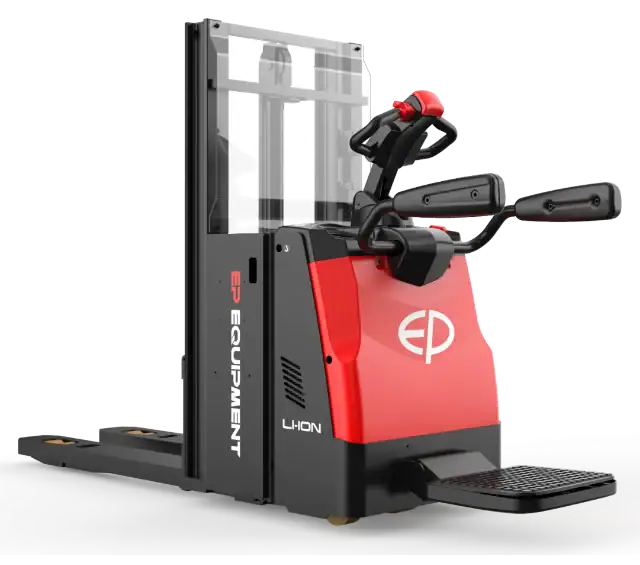
RSI201
Platform, two pallets at once
- Capacity
- 2,000 kg
- Lifts to
- 1,600 mm
- Mast lowered
- 1,316 mm
- Battery
- 24V 205Ah
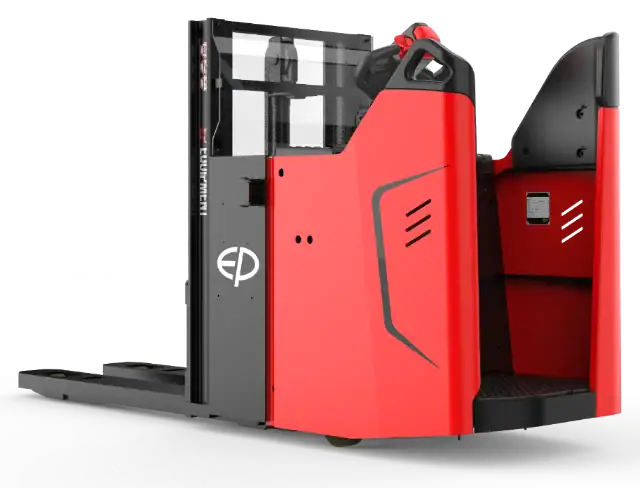
KSI201
Stand-on, two pallets at once
- Capacity
- 2,000 kg
- Lifts to
- 2,100 mm
- Mast lowered
- 1,316 mm
- Battery
- 24V 205Ah
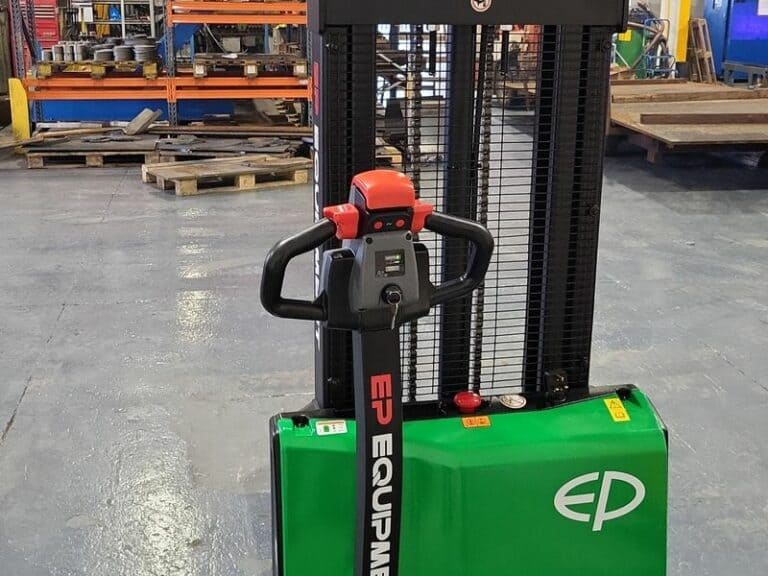
The DS3 lithium, in stock now
A compact walk-behind stacker for shops, stock rooms and small warehouses: 834 mm wide, it lifts 1.5 tonnes to just over 3 m and works on flat, smooth floors. The ones in stock are the lithium version.
- Capacity
- 1,500 kg
- Lifts to
- 3,018 mm
- Height, mast lowered
- 2,067 mm
- Battery
- 24V 40Ah lithium (80Ah AGM to order)
- Slope, laden
- 3%
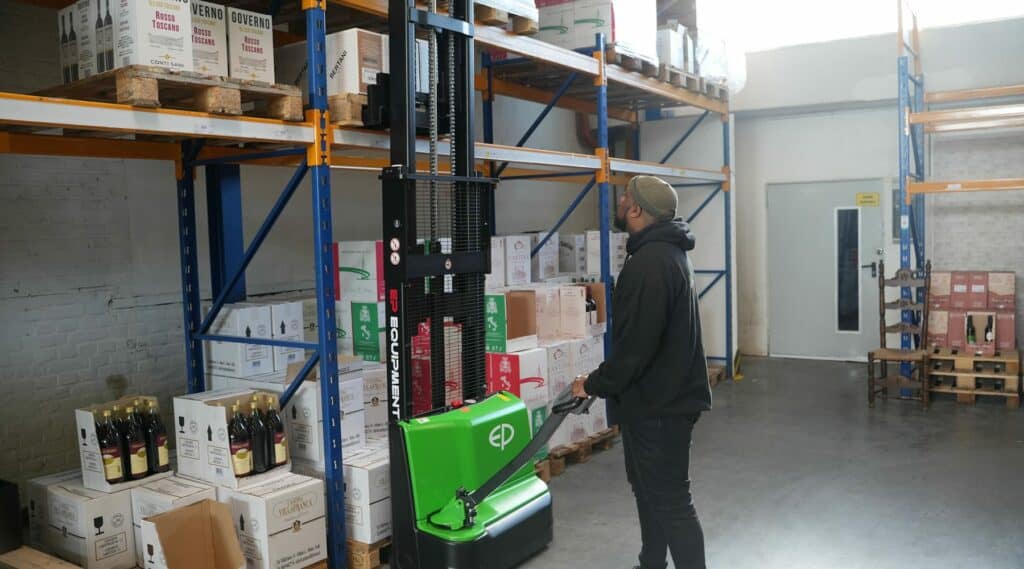
Stacker or forklift?
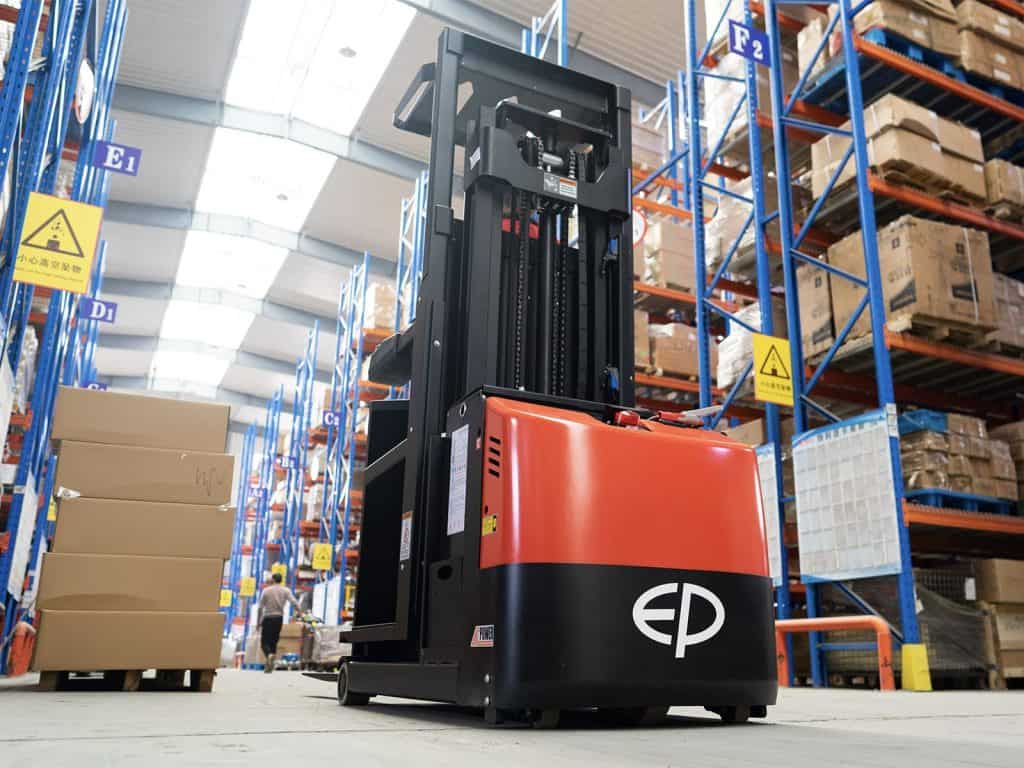
A stacker costs less, takes less space and is quicker to learn. A forklift does the jobs a stacker can't. Most sites know which side they're on in a minute.
A stacker suits
- Indoor work on smooth, flat floors
- Racking up to 5.5 m, and mezzanines and benches
- Loads up to 2 tonnes
- Tight store rooms where a forklift won't fit
A forklift suits
- Loading trailers from the ground
- Ramps: light stackers climb only 3% loaded
- Yards and outdoor work
- Loads over 2 tonnes
With every EP stacker from Clearlift
- New, with the full EP warrantyEvery stacker we sell is new from the EP factory.
- Delivered on our own trailerAnywhere in Ireland and Northern Ireland.
- A reply the same working dayTell us what you move and we'll come back with the right truck and a price.
- Our own engineersService, repairs and the GA1 or LOLER thorough examination, in all 32 counties.
- Genuine EP partsDirect from the factory, through us.
- A reply the same working dayAsk for a price and we'll come back to you the same working day.
"The service that we have received from Clearlift from day one has been excellent."
Buy from stock
The DS3 is in stock, priced on this page and delivered on our own trailer.
See what's in stockFactory order
Any of the other 25 models, ordered new from the EP factory with the mast and battery you need. Ask for a price and a delivery date.
Get a priceContract hire
A new EP stacker for a fixed weekly price on a 12-month contract, with servicing, repairs and GA1 or LOLER inspections included.
See contract hireNot quite a stacker job?
EP makes four other types of warehouse truck.
Questions about electric stackers
Anything else, call us on 01 5267 411 (ROI) or 028 3833 7038 (NI).
What is the difference between a standard and a straddle stacker?
On a standard stacker, the support legs run under the pallet, so it needs pallets with an open bottom, such as Euro pallets lengthways. On a straddle stacker, the legs sit either side of the pallet, so it can lift closed-bottom, wide and industrial pallets. EP's straddle models are the ESA121-D, WSA121-D, WSA161-D and WSA181-D. Counterbalance stackers, the RSC models, have no legs at all.
How high can an electric stacker lift?
Up to 5.5 m on the WSA161, WSA121-D, WSA161-D and WSA181-D, and 4.8 m on the WSA121. Most entry and platform models lift to about 3 m. Allow about 100 mm above your top beam so the pallet clears it. For higher racking, or narrow aisles all day, look at a reach truck.
Will a stacker fit under my doors?
Check the height with the mast lowered. On EP's stackers it runs from 1,316 mm on the RSI201 and KSI201 double-deck trucks to 2,425 mm on the ESA121-D, and most are between 1,950 and 2,100 mm. Each model page lists it.
What does initial lift mean?
Models with initial lift, such as the WSA161I, RSL16I PRO and ES16-RSI, can raise their support legs as well as the forks. That gives extra ground clearance over ramps and dock plates, and lets the double-deck models carry two pallets at once.
Should I choose a stacker or a forklift?
A stacker is cheaper, smaller and easier to learn, and suits indoor stacking on smooth floors. A forklift is better for loading trailers from the ground, ramps, outdoor work and loads over 2 tonnes.
Can I hire an electric stacker instead of buying?
Yes, on contract hire, at a weekly price on a 12-month contract, with servicing, repairs and inspections included. We don't do short-term hire.
Who services and inspects it?
Our own mobile engineers service and repair EP warehouse trucks across all 32 counties, with genuine EP parts direct from the factory. They also carry out the thorough examination of lifting equipment: GA1 in the Republic, LOLER in Northern Ireland.