
Lithium-ion forklifts for Ireland & Northern Ireland
EP lithium forklifts and warehouse trucks charge on your breaks, need no battery watering and cost far less to run than diesel or LPG. Work out what you'd save in under a minute.
- Up to 83% less CO₂Than a diesel truck, per hour worked
- At least 74% lower energy costsThan diesel, at every size we compared
- Top up on breaksOne battery, two shifts
- No watering, no battery roomSealed, managed battery
What would you save by switching to EP lithium?
Pick the truck you run now and how much it works. We'll compare it with an EP lithium-ion truck of the same capacity.
Your current truck
Over a full 15,000-hour working life, including building the truck and battery, an EP lithium truck produces about 0 tonnes less CO₂e than a truck.
Want a proper figure for your site? Send us your result and we'll price the right EP truck.
Send Me a QuoteEstimates from a product carbon footprint (PCF) study of EP trucks, per hour of work by fuel type and capacity. Costs use UK energy and fuel prices from the study, converted to euro at £1 = €1.17. Your costs depend on your electricity tariff, fuel price and how hard the truck works.
Lithium-ion vs lead-acid vs diesel vs LPG
Figures for a 3-tonne counterbalance truck. The top three rows come from the same PCF study as the calculator.
| Compared on | EP lithium-ion | Lead-acid electric | Diesel | LPG |
|---|---|---|---|---|
| CO₂e per working hour | 2.14 kg | 2.48 kg | 12.74 kg | 6.49 kg |
| Energy or fuel cost per hour | £1.31 | £1.52 | £5.54 | £3.48 |
| Lifetime CO₂e per hour, including manufacture | 2.88 kg | 3.19 kg | 13.11 kg | 6.86 kg |
| Charging or refuelling | Around 2 hours for a full charge, top up on any break | Around 8 hours plus cooling, no topping up | Refuel in minutes | Swap the gas bottle |
| Battery room needed | No | Usually, with ventilation and eyewash | No | Gas bottle cage |
| Daily battery or engine care | None | Watering and checks | Engine oil, coolant and filters | Engine checks, gas bottle swaps |
| Exhaust fumes where it works | None | None | Yes | Yes |
| Spare battery for two shifts | Not needed | Usually needed | No | No |
Costs per hour in sterling at UK prices from the study. Charge times are typical and depend on the battery and charger.
What changes when you switch to lithium
Charge on breaks
Plug in for 15 to 30 minutes at tea break or lunch. Partial charges don't harm the battery, so one truck can cover two shifts.
No watering or acid
The battery is sealed. No topping up with water, no acid spills, no equalising charges and no one to train on battery care.
Full power to the end
Lithium keeps its voltage steady as it discharges, so the truck lifts and travels at full speed right up to the next charge.
Free up the battery room
No hydrogen gassing in normal charging means no ventilated battery room, no battery swaps and no spare batteries taking up space.
Long battery life
Typically rated for 3,000+ full cycles, so one lithium battery can outlast several lead-acid batteries.
Managed and monitored
A battery management system watches every cell's temperature and voltage, and shows charge level on the truck's display.
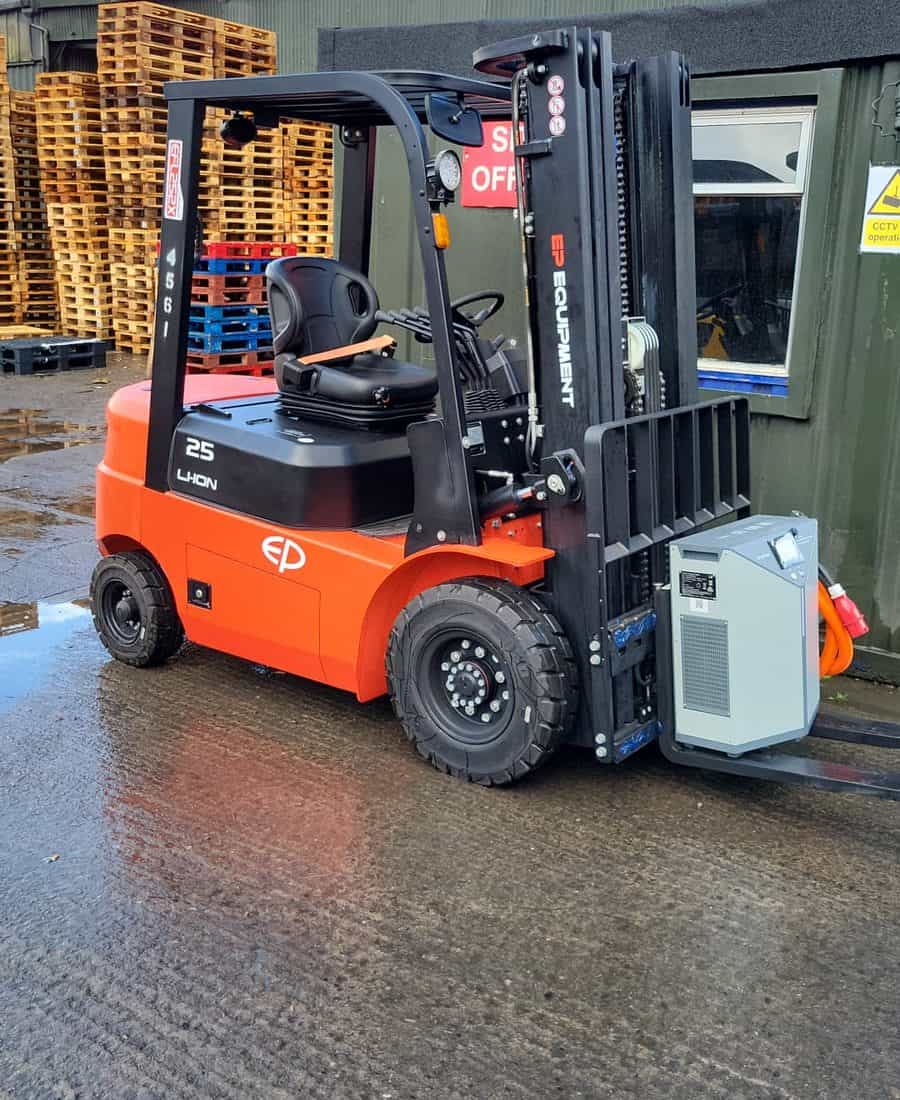
One battery, a full working day
With lead-acid, a two-shift site needs a spare battery and a battery change mid-day. With lithium, the truck tops up while your driver has a break. Here's how a typical day can look:
- 100%Shift starts on a full battery
- 72%Tea break: 20 minutes on the charger
- 68%Lunch: 30 minutes on the charger
- 65%Shift change: a quick top-up and the next driver carries on
- 100%Overnight: full charge, ready for the morning
An example only. Actual charge levels depend on the truck, battery, charger and work.
Plan Charging for Your SiteWhere lithium works best
Lithium suits most sites, but not every one. We'll tell you straight if another option makes more sense.
A great fit if you…
- Run more than one shift, or trucks work long hours
- Work indoors, in food, drinks or pharma, or anywhere fumes are a problem
- Want to replace diesel or LPG trucks and cut fuel bills
- Don't have room for a battery room or battery changes
- Have carbon or ESG targets to report on
Talk to us first if you…
- Work in a cold store or freezer
- Lift heavy loads on rough, unmade ground
- Only use a truck for an hour or two a week
- Have lead-acid trucks with years of life left in them
EP makes its own lithium batteries
Most forklift brands buy their batteries in. EP Equipment builds its own, and designs its trucks around them from the start rather than fitting lithium into a lead-acid design.
EP figures from EP Equipment.
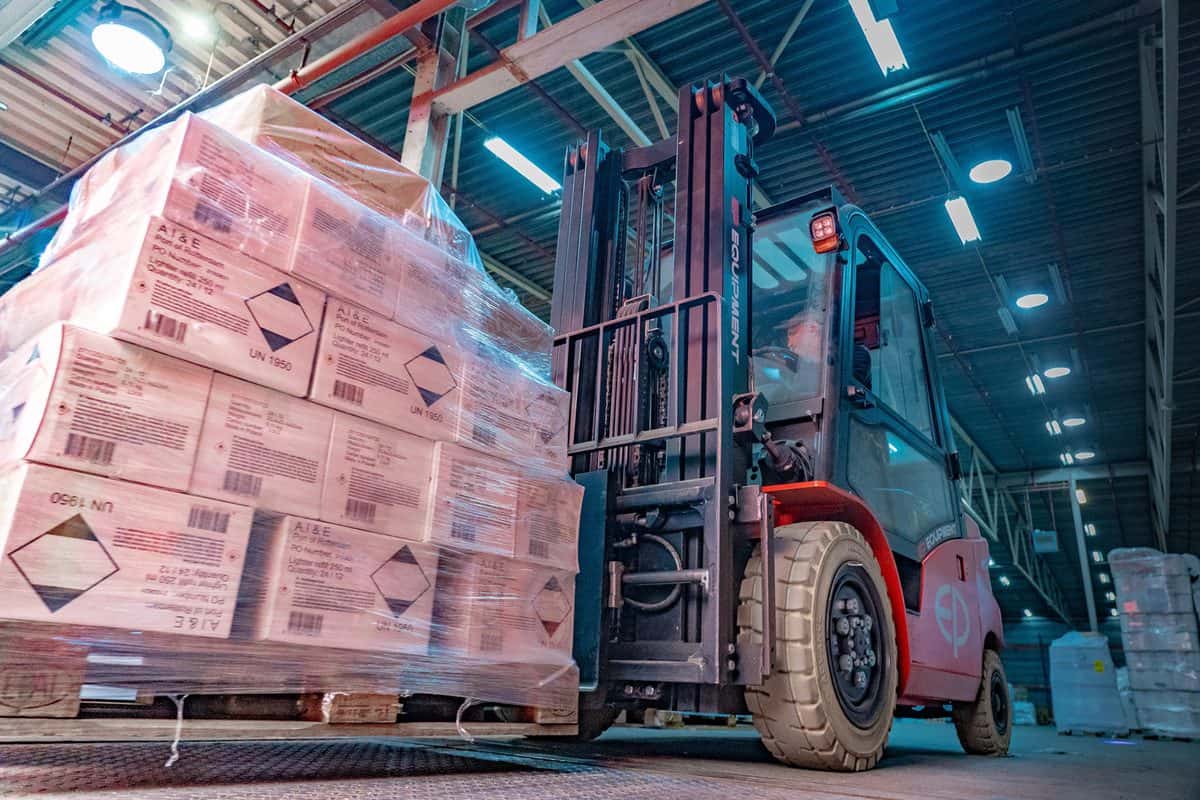
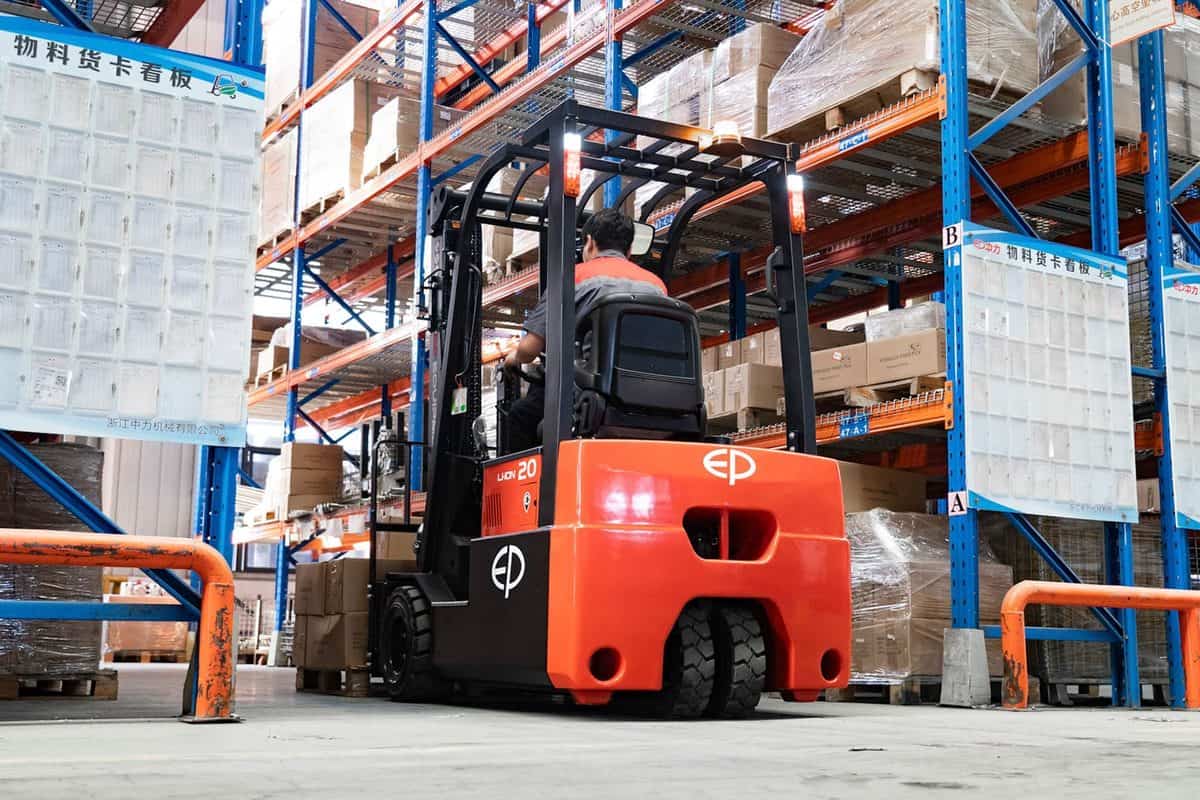
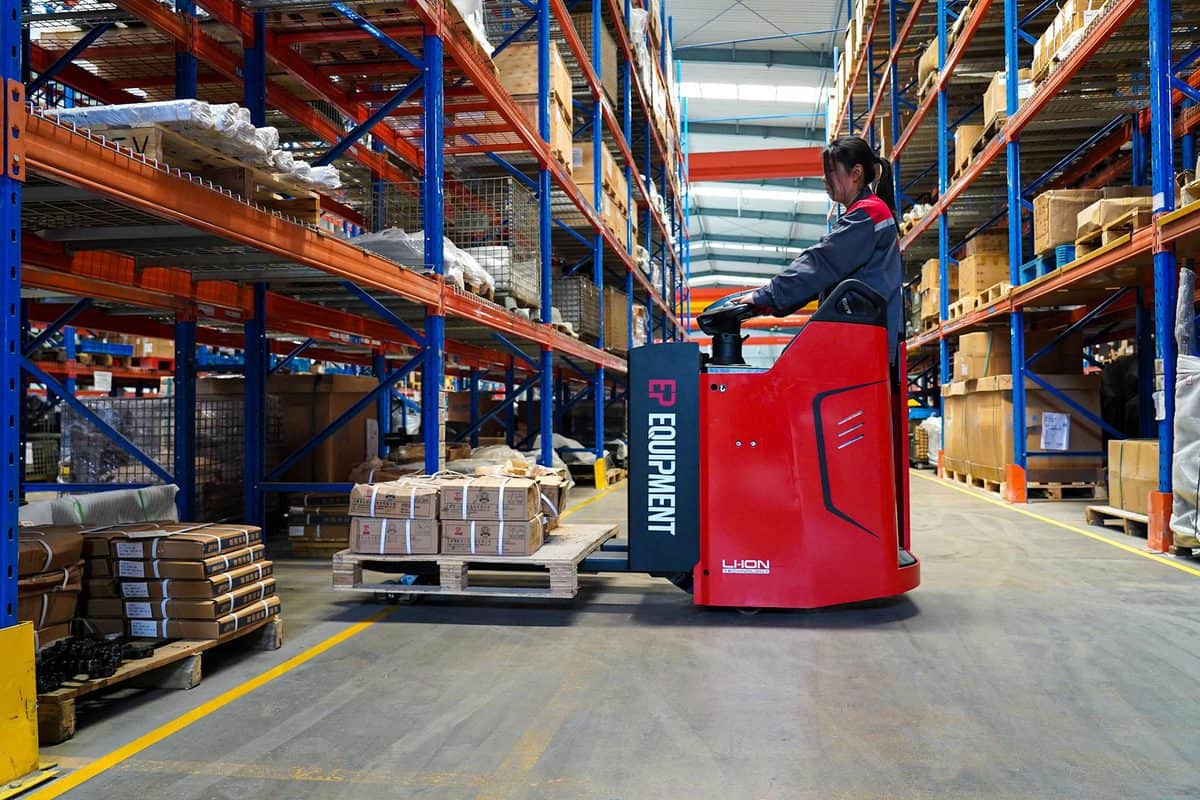
Prefer not to buy? EP lithium trucks are available on contract hire from 12 months.
Lithium-ion forklift questions
How long does a lithium-ion forklift battery last?
A lithium-ion forklift battery is typically rated for 3,000 or more full charge cycles, and short top-ups only count as part of a cycle. In practice that usually means several years of daily use, often outlasting two or three lead-acid batteries. We'll give you the rated figure for the exact EP model you're looking at.
How long does a lithium forklift take to charge?
With the matching EP charger, a full charge typically takes around 2 hours, and you can top up for 15 to 30 minutes on breaks. A lead-acid battery usually needs around 8 hours on charge plus time to cool down, and shouldn't be topped up part-way.
What is opportunity charging?
Opportunity charging means plugging the truck in whenever it's parked for a while, such as tea breaks, lunch or shift changes. Lithium-ion batteries don't mind partial charges, so a single battery can keep one truck working across two shifts, with no spare battery or battery swaps.
Are lithium-ion forklifts safe?
Yes. EP lithium forklifts use lithium iron phosphate (LFP) cells, one of the most stable lithium chemistries. A built-in battery management system watches the voltage and temperature of every cell and cuts out if anything is out of range. The battery is sealed, so there's no acid to spill and no hydrogen gassing during charging.
Do lithium forklifts need maintenance?
The battery itself needs no watering, equalising charges or acid checks. The truck still needs regular servicing, and like any forklift it needs its statutory thorough examination (GA1 in the Republic of Ireland, LOLER in Northern Ireland). Our service team covers both.
Do I need a battery charging room for lithium?
Usually not. Lithium-ion batteries don't give off hydrogen in normal charging, so you don't need the ventilated battery room, eyewash station or watering kit that lead-acid needs. The charger still needs a suitable spot and power supply, and we'll check that when we visit your site.
Can lithium forklifts work in cold stores?
Some can, with the right battery and truck spec for low temperatures. Tell us the temperature your trucks work at and how long they spend inside, and we'll recommend a suitable EP model.
Can a lithium forklift replace a diesel forklift outdoors?
In many yards, yes. EP's larger lithium counterbalance forklifts are built to do the work of diesel and LPG trucks, inside and out, with no exhaust fumes. We'll look at your ground, ramps and loads first, and you can try one on your own site before you commit.
Is a lithium-ion forklift more expensive?
The upfront price is higher than a lead-acid truck, but energy costs are lower, there's no battery care to pay for, and you don't need a spare battery or battery room. Use the savings calculator above, or spread the cost with contract hire or finance.
Can I hire a lithium-ion forklift?
Yes. Our EP lithium forklifts and warehouse trucks are available on contract hire from 12 months, with servicing from our own engineers. See forklift hire for what's included.
Where do the calculator figures come from?
The calculator uses per-hour figures from a product carbon footprint (PCF) study of EP trucks, comparing lithium-ion with lead-acid, diesel and LPG trucks of the same lifting capacity. Costs are based on UK energy and fuel prices in the study and are converted to euro at a fixed rate, so treat them as estimates. Your own costs depend on your tariff, fuel price and how the trucks are used.
Try an EP lithium forklift on your site
Tell us what you lift and how many hours you work. We'll recommend the right EP lithium truck, show you the running costs, and arrange a demo.
Or call 01 5267 411 (ROI) · 028 3833 7038 (NI)
Send us a message
Leave your details and we'll come back to you, usually within a few hours.
Thanks, we've got your message
We'll be in touch, usually within a few hours during business hours.
Prefer to chat? Message us on WhatsApp