Last updated: November 2026
Choosing a forklift starts with three questions: what you lift, how high, and where. This guide explains the main types of forklift and warehouse truck, what each one is for, and where to see the EP models we supply.
Counterbalance forklifts
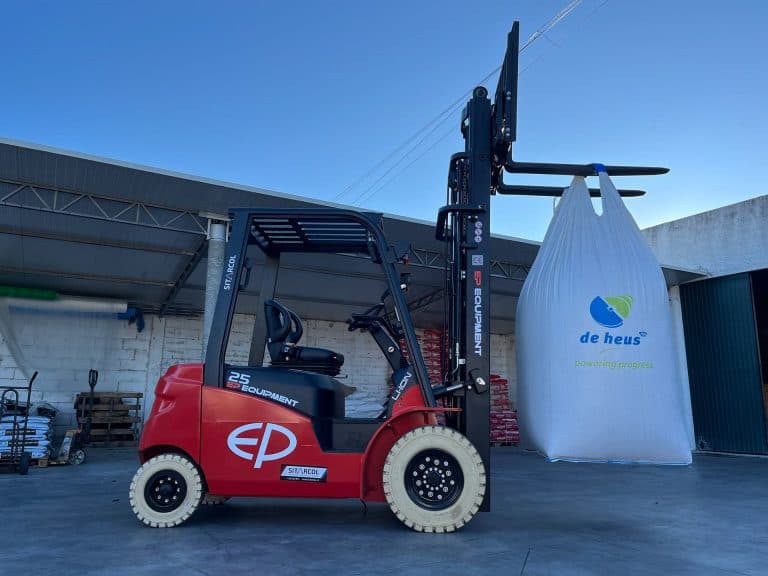
The classic forklift, with the forks at the front and the weight of the truck behind. Counterbalance forklifts load and unload lorries, move pallets around yards and stack in wider aisles. They need an aisle of about 3.5 to 4 metres, and EP counterbalance trucks lift up to 7.2 metres.
- Electric forklifts: the full EP counterbalance range.
- 3-wheel forklifts: a tighter turning circle for smaller indoor sites.
- 4-wheel forklifts: compact 4-wheel trucks for indoor work.
- 4-wheel forklifts: built for yards, ramps and mixed surfaces as well as warehouse floors.
- Heavy-duty forklifts: for heavy loads, up to 25 tonnes.
Pallet trucks
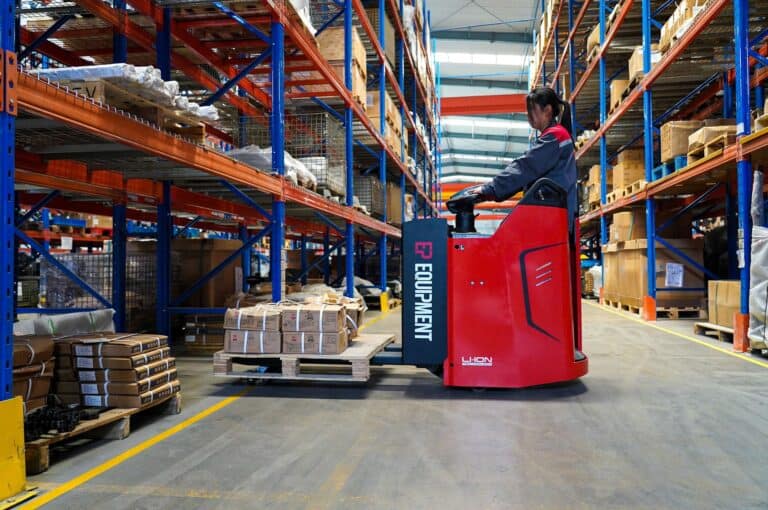
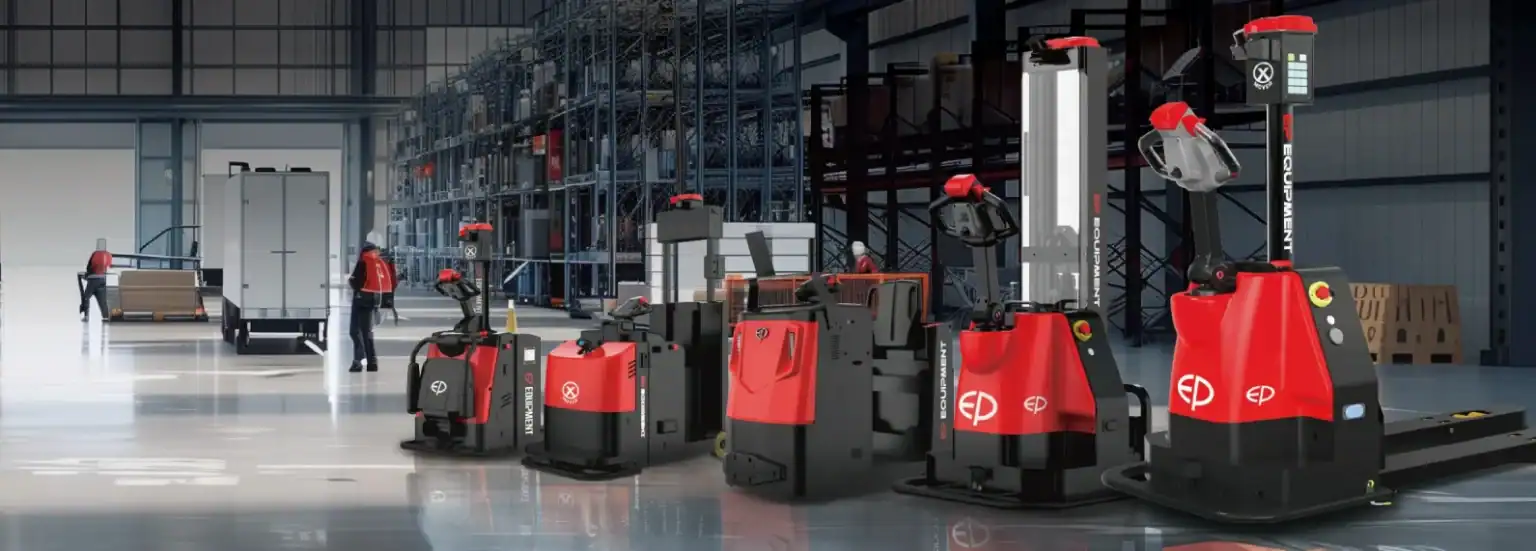
Pallet trucks move pallets along the floor rather than lifting them high. Walk-behind models suit stockrooms, loading bays and production floors, and ride-on and stand-on models cover longer runs. See electric pallet trucks, or the popular EP F4.
Stackers
A stacker lifts pallets onto racking, with the operator walking behind or standing on the truck. Stackers suit smaller warehouses and narrow aisles, with lifts up to about 5.5 metres. See electric stackers.
Reach trucks
A reach truck’s forks reach out to the racking while the truck stays straight in the aisle, so it works in aisles of about 2.7 metres and lifts up to 9.65 metres. It’s the usual choice for high-bay warehouses. See reach trucks and our guide to getting more from narrow aisles.
Order pickers
An order picker lifts the operator with the forks, so they can pick single items or cases from racking at height. See order pickers.
Tow tractors
A tow tractor pulls trailers or trolleys, which suits factories moving parts between lines and sites with long runs. See tow tractors.
Automated trucks
Automated pallet trucks and forklifts drive set routes on their own, such as from the end of a production line to the warehouse. See automated pallet trucks, autonomous forklifts, and how automation works.
Electric, diesel or gas?
Every truck we supply is electric, and most run on lithium-ion batteries that charge on breaks and need no watering. Electric trucks have no exhaust, so they suit indoor work, and EP’s indoor and outdoor range does the yard work that used to need diesel. See diesel vs electric and lithium-ion forklifts.
How to choose
- Load: your heaviest load, and its size. A truck’s rated capacity drops as you lift higher, so choose one with headroom.
- Lift height: the highest rack level you need to reach.
- Aisles: the narrowest aisle the truck must work in.
- Ground: smooth warehouse floors, or a yard, ramps and gravel.
- Hours: how many hours a day the truck works, and whether you run more than one shift.
Answer a few quick questions in our equipment finder to see which EP models fit. You can buy, see what’s in stock now, or hire on a 12-month contract.
Talk to us
Tell us what you move and we’ll recommend the right EP truck the same working day. Call 01 5267 411 (ROI) or 028 3833 7038 (NI), or send us a message.