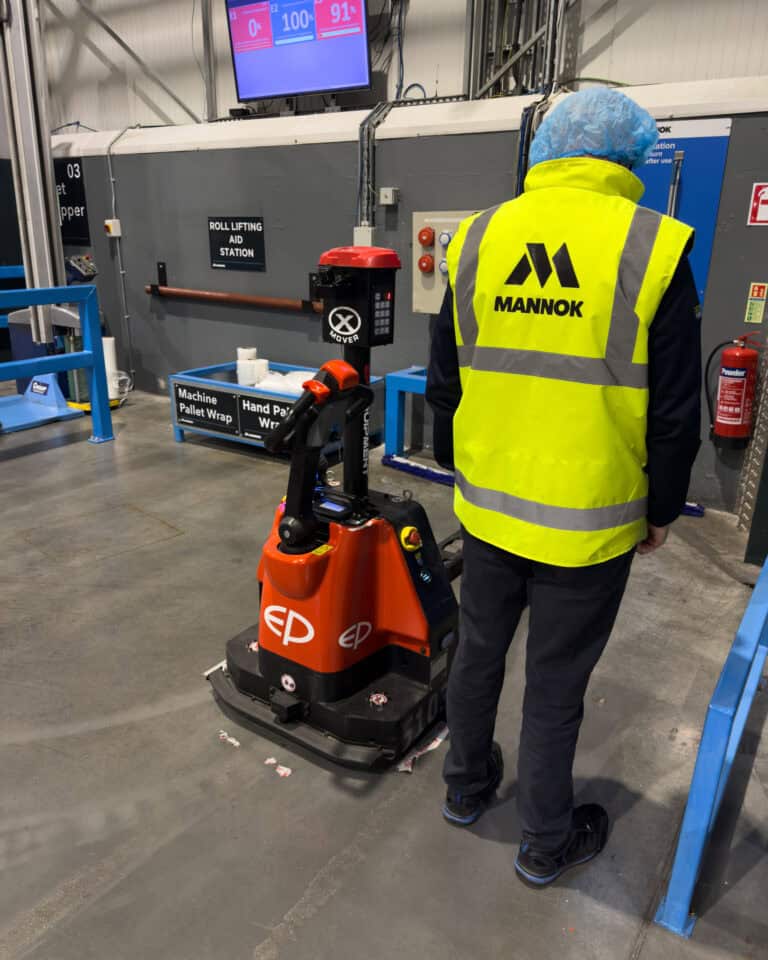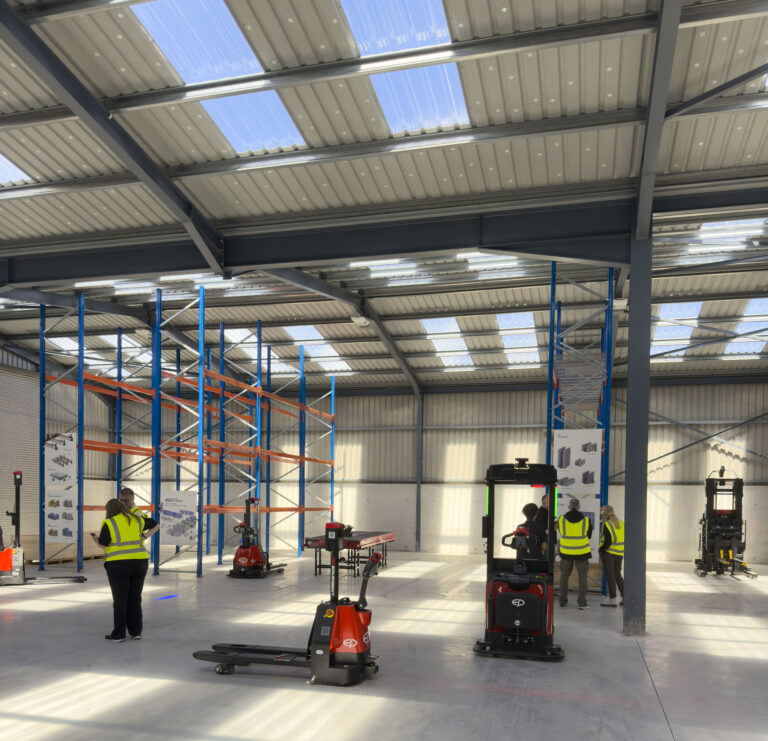
Moving bulk produce and animal feed is a daily reality for farms, agri yards, mills, merchants, and food operations across Ireland and Northern Ireland. Whether you’re shifting palletised feed bags, handling bulk bins, loading lorries, or moving goods in a shed or warehouse, the right forklift makes a noticeable difference to speed, safety, and cost.
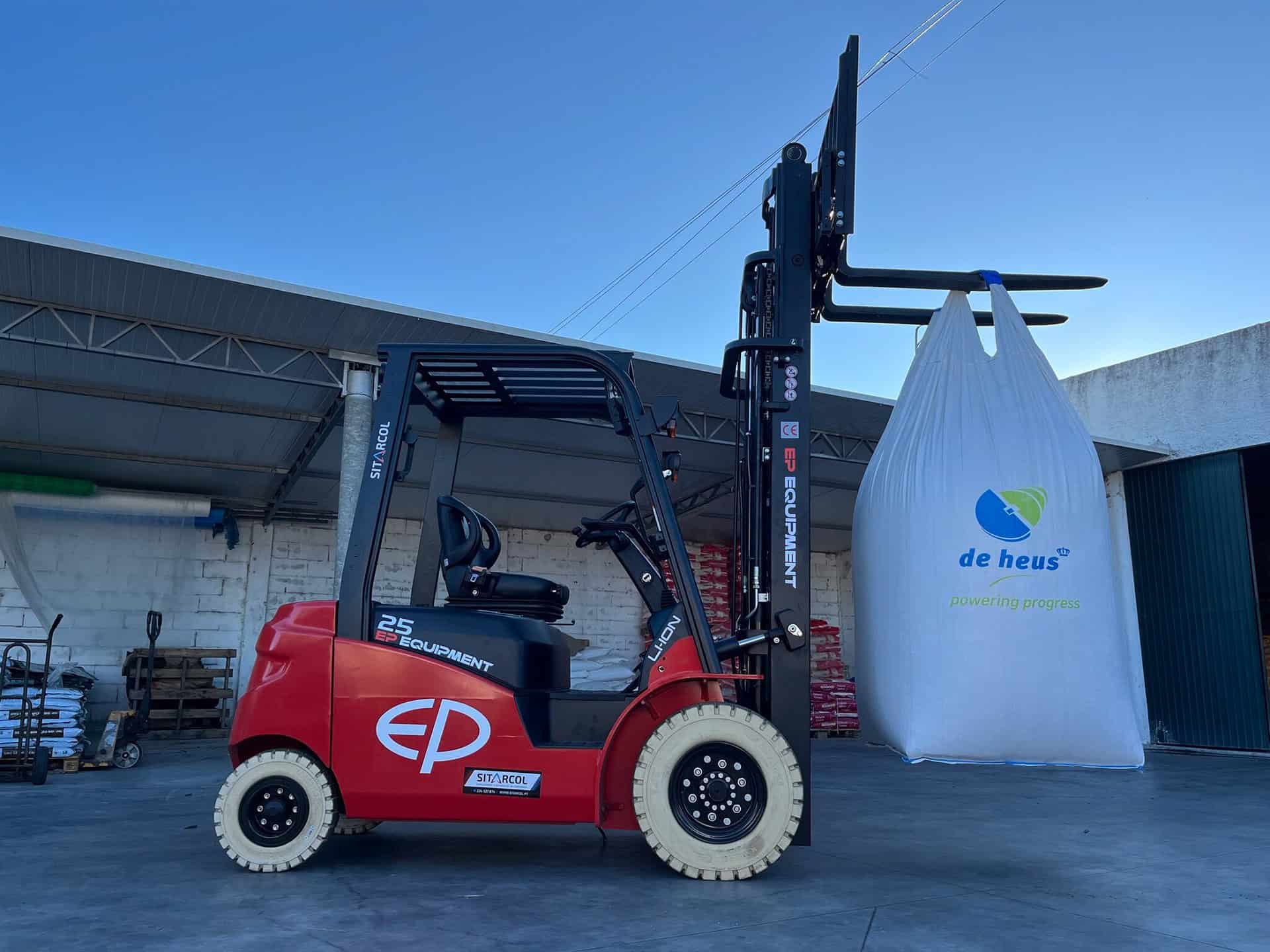
What makes bulk produce and feed handling different?
Most forklift problems in agricultural and feed environments come down to three factors:
1) Surface and environment
You’re rarely working on perfectly smooth concrete all day. Many sites have:
- uneven yard surfaces
- gravel or wet areas
- ramps and thresholds
- tight spaces inside sheds or stores
A forklift that performs well indoors can struggle quickly outside if the tyres and setup aren’t right.
2) Dust, debris, and rough use
Feed stores and yards can be dusty, with heavy daily use and constant loading/unloading. Reliability and aftercare matter more here than fancy extras.
3) Load shape and stability
Feed and produce loads aren’t always neat pallets. You may be handling:
- bulk bins and boxes
- palletised bags with variable wrapping
- long or awkward loads (pipes, timber, farm inputs)
- high stacking heights for storage efficiency
Stability and visibility are key.
The 5 questions to answer before choosing your forklift
If you want to get this right first time, these are the questions we ask most customers:
1) How heavy are your loads, really?
Most feed and produce operations fall into these capacity bands:
- 1.5T–2.5T: typical pallet work, smaller yards
- 3.0T–3.5T: heavier feed pallets, frequent outdoor movement
- 5.0T+: bulk handling, lorry loading all day, larger merchants / mills
A forklift that’s “just about enough” on paper can feel underpowered once you add real-world factors like uneven ground, gradients, and attachments.
2) Indoor, outdoor, or both?
This affects:
- tyre choice (solid vs pneumatic)
- ground clearance
- manoeuvrability requirements
If you’re doing mixed work, a forklift that can confidently handle both environments is the sweet spot.
3) How high do you need to lift?
Not all sites need height, but if you’re stacking:
- in racking
- in high bays
- in tight spaces where you rely on efficient stacking
…you’ll want to choose mast height and stability carefully.
4) How tight is your space?
If you’re manoeuvring in narrow stores or inside sheds, compact turning performance matters.
5) Will you run one shift or multiple?
If the forklift is working constantly, battery type and charging approach can make or break productivity.
The best forklift types for bulk produce and feed handling
1) Electric counterbalance forklifts (the modern all-rounder)
For many sites, especially those moving palletised feed or produce daily, electric counterbalance trucks are now the most practical choice.
Why they work well:
- strong performance for everyday handling
- low running costs compared to diesel
- quieter operation and no exhaust fumes indoors
- smooth handling for repeat work
Best for:
- warehouses and stores
- feed merchants
- mixed indoor/outdoor operations (with the right tyres)
✅ Clearlift forklift options to consider:
- EP 3-wheel electric forklifts (ideal where space is tight)
- EP 4-wheel electric forklifts (more stability for heavier loads and yard work)
2) 3-wheel vs 4-wheel: which suits farm and yard work best?
This comes up constantly.
3-wheel forklifts are brilliant when:
- you’re working in tighter spaces
- you need sharp turning
- you’re mostly indoors
4-wheel forklifts are usually better when:
- loads are heavier
- you spend more time outdoors
- stability is a priority
- ground conditions aren’t perfect
If your site is mainly outdoor yard work or heavier pallet handling, most customers benefit from a 4-wheel setup.
3) High-capacity forklifts (5T+) for heavy feed handling
Some operations simply need serious lifting capacity—especially if you’re handling bulk pallets, large bins, or frequent artic loading.
In these cases, a heavier-capacity electric forklift can be a strong option when you want power without diesel fumes and noise.
Best for:
- larger feed merchants
- mills
- high-volume yard operations
- frequent loading/unloading cycles
4) Pallet trucks and stackers for stores and sheds
Not every bulk handling task needs a forklift. For lighter-duty moves around a store, a good electric pallet truck can take pressure off the forklift and speed up short transport runs.
Best for:
- moving pallets within stores
- loading bays (short moves)
- freeing the forklift for heavier work
Key features that matter in produce and feed environments
When your forklift is working hard on a yard every day, these specs matter more than most people realise:
Tyres that match the ground
For outdoor or mixed surfaces, tyre choice affects grip, stability, and comfort. This is one of the most common “missed” details in forklift selection.
Visibility and control
Better visibility means safer yard movement, easier pallet placement, and fewer damaged pallets/loads.
Battery and charging approach
If you’re running multiple shifts or doing constant loading cycles:
- lithium battery setups can improve uptime
- the right charging plan reduces downtime
- plug-and-play charging makes life easier for the team
Service support (more important than people think)
In feed and agri environments, downtime is expensive. Reliable service and parts support is often the difference between “a good deal” and a costly headache.
Common mistakes to avoid
Here are the issues we see most often when customers buy without proper guidance:
- choosing capacity too low for real yard conditions
- selecting a truck that’s great indoors but struggles outside
- ignoring tyre choice and ground conditions
- not planning charging properly for heavy usage
- prioritising cheapest upfront price instead of uptime and support
The simplest way to choose the right forklift for your site
If you’re handling bulk produce or feed daily, the best approach is a quick site-based assessment:
- confirm your heaviest regular load
- check indoor/outdoor usage and surfaces
- match the right capacity + tyre setup
- choose a battery strategy that supports your working day
At Clearlift, we help customers across Ireland and Northern Ireland match the right forklift to how they actually work—not just what looks good on a spec sheet.
Need help choosing the right forklift?
If you tell us:
- your load weight
- your main working surface (yard / shed / warehouse)
- and how many hours per day the forklift is running
…we can recommend the best-fit options for your site, including electric models suitable for mixed indoor/outdoor work.
???? Browse our forklifts
???? View the EP EFL503-HV (5T electric)