Last updated: August 2026
For food manufacturers across Ireland and Northern Ireland, the choice of forklift technology is not a minor operational decision. It directly affects HACCP compliance, shift productivity, energy bills, and the ability to operate across both production floors and external yard environments with the same fleet.
Lithium-ion forklifts have become the standard choice across food production for good reasons. Here’s what the technology delivers and why EP Equipment’s lithium-ion range, available from Clearlift, is particularly well suited to Irish food and drinks manufacturing.
1. Zero Emissions — A Non-Negotiable for Food Production Areas
Diesel and LPG forklifts produce exhaust fumes. In food production, fumes near product, packaging, or handling areas violate HACCP food safety requirements and can trigger enforcement action from the Food Safety Authority of Ireland (FSAI) or the Food Standards Agency (FSA) in Northern Ireland.
Lithium-ion electric forklifts produce zero emissions during operation. No exhaust, no fumes, no requirement for additional ventilation in enclosed production areas. They can operate freely anywhere on a food production site, indoors and out and without compliance concerns.
2. No Battery Maintenance — Removing a Practical Headache
Lead-acid batteries require weekly watering, regular equalisation charges, and careful handling due to acid exposure risks. In a food production environment, acid near food handling areas adds a contamination and safety risk that most compliance managers would rather avoid entirely.
EP Equipment’s lithium-ion batteries are sealed, maintenance-free units. No watering, no acid, no specialist handling. The Battery Management System (BMS) monitors every cell automatically. Your team never needs to touch the battery except to plug it in.
3. Opportunity Charging — Critical for Multi-Shift Food Operations
Food production often runs around the clock or across extended shift patterns. Lead-acid batteries require 6–8 hours of charging time and must cool before recharging, making them impractical for anything beyond a single shift without expensive battery swap infrastructure.
Lithium-ion supports opportunity charging: top up during breaks, shift handovers, or any natural pause in the workflow. A 30–60 minute opportunity charge is typically sufficient to keep the machine running through an extended shift. No battery rooms, no swap equipment, no downtime.
This is particularly relevant for Irish food manufacturers running day/night operations with one machine per shift, charged during handover, is a realistic operating model with lithium-ion.
4. Lower Running Costs Across the Life of the Fleet
The total cost of ownership for lithium-ion forklifts is consistently lower than diesel or lead-acid electric alternatives, particularly over a 5–7 year fleet lifecycle:
- No fuel costs — energy cost per operating hour is significantly lower than diesel
- Minimal servicing — fewer moving parts, no engine maintenance, no oil changes
- Longer battery life — EP’s lithium-ion batteries are rated for up to 4,000 charge cycles, compared to 1,200–1,500 for lead-acid
- No battery replacement at mid-life — lead-acid batteries typically need replacement at 3–4 years, lithium-ion batteries last the life of the machine
Use our Lithium-Ion Savings Calculator to calculate the cost difference for your operation.
5. Consistent Performance Across the Full Shift
Lead-acid batteries lose power progressively as they discharge. An operator on a lead-acid truck at the end of an 8-hour shift is working with a machine running at 70–80% of its rated capacity. In a food production environment where throughput targets are set based on peak machine performance, this creates a real productivity gap.
Lithium-ion delivers consistent, full power from the first pallet of the shift to the last. Your throughput targets are based on what the machine actually delivers, consistently.
6. Safe for Cold Store and Refrigerated Environments
Many food production and distribution operations include cold store or refrigerated environments. Lithium-ion performs in low temperatures — EP Equipment’s batteries include thermal management designed for cold store use. Lead-acid batteries degrade rapidly in cold, losing both capacity and lifespan.
For food distributors operating refrigerated warehouse environments in Ireland or Northern Ireland, lithium-ion is the only practical electric option.
The EP Equipment Lithium-Ion Range for Food Manufacturers
At Clearlift, every machine we supply runs on lithium-ion. For food production specifically, the most relevant models are:
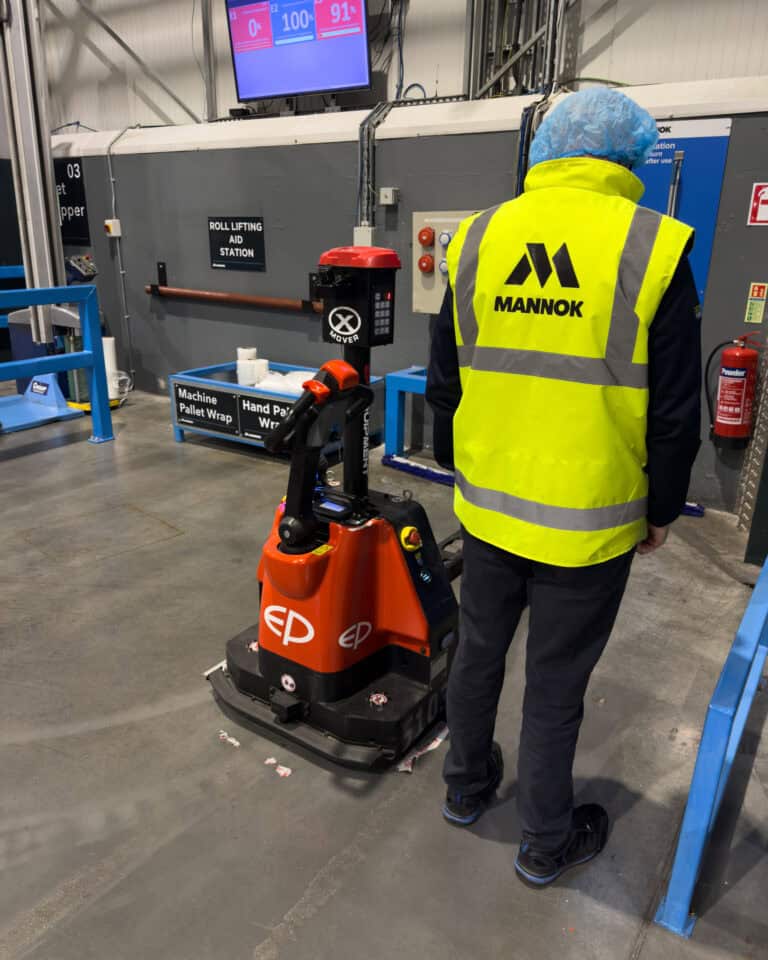
- EP F4 Electric Pallet Truck — compact, manoeuvrable, ideal for tight production floor layouts
- EP KPL201 Ride-On Pallet Truck — for high-throughput operations requiring speed across larger floor areas
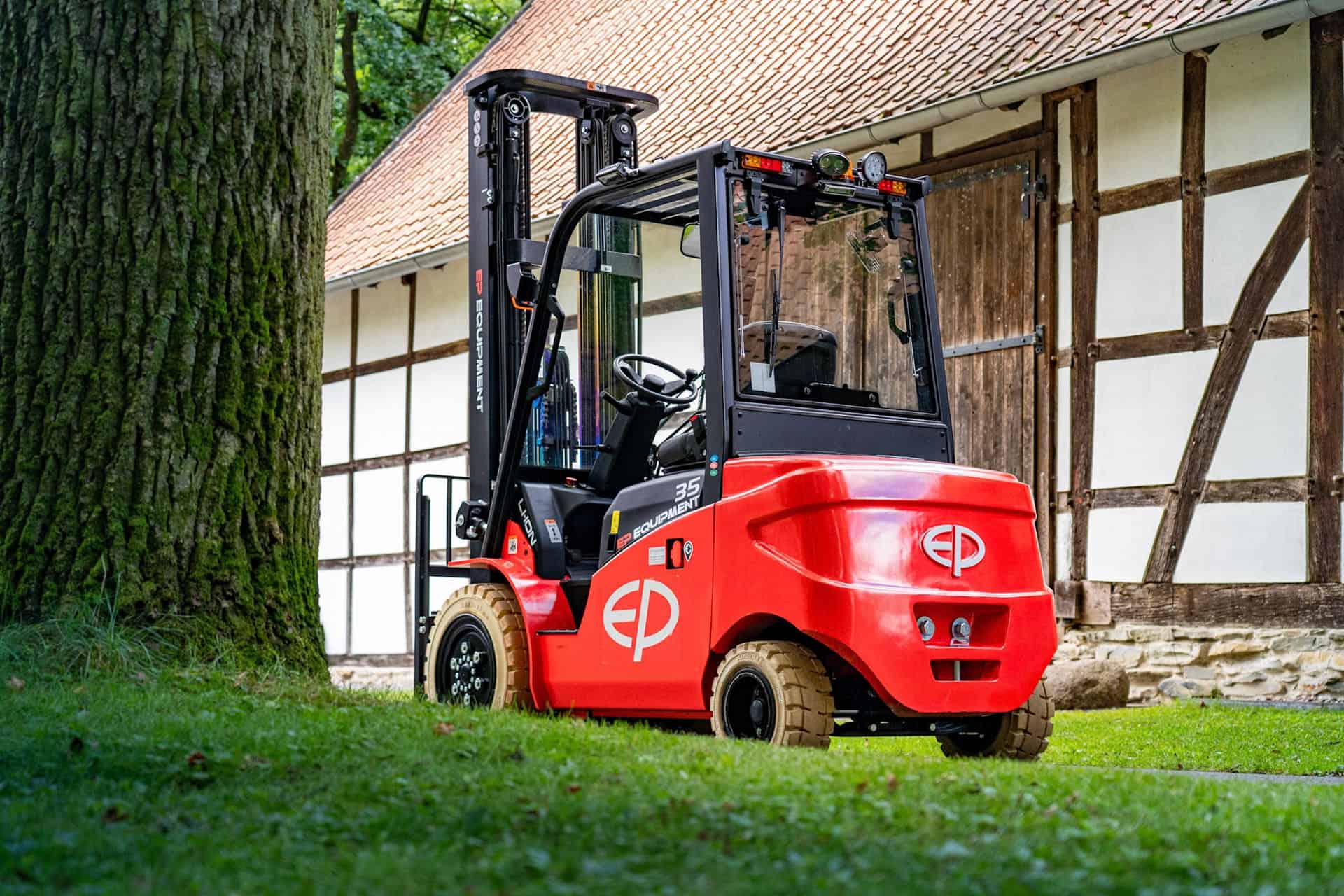
- EP EFL Series — for operations needing a single fleet that covers both the production floor and the external yard
See the full electric pallet truck range.
See the full electric forklift range.
Book a Free Demo at Our Navan Centre
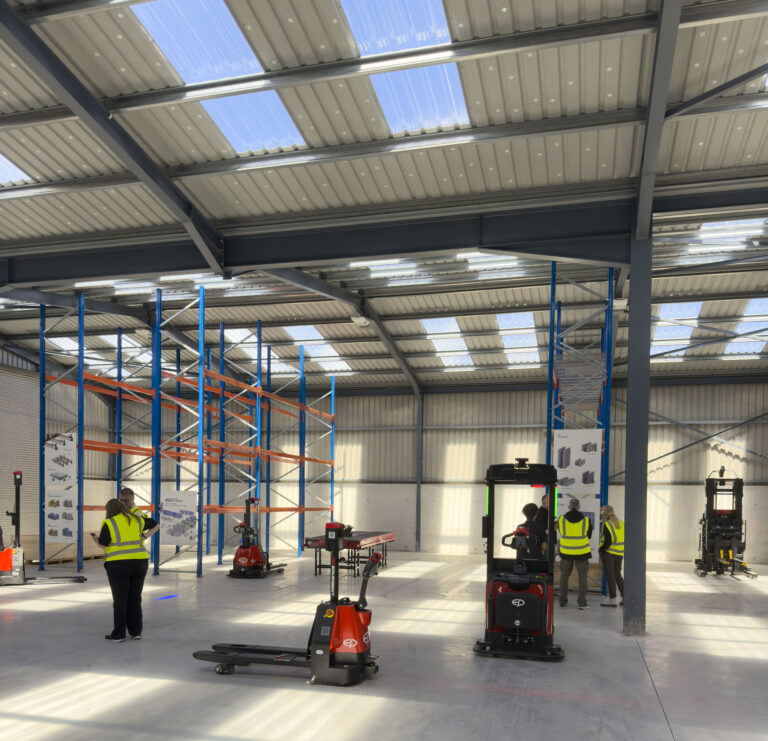
Our demo centre in Navan, Co. Meath is a working facility where you can put any of these machines through a real operating cycle before making a decision. Bring your load specifications, your shift pattern questions, and any compliance concerns — our team will give you straight answers.
Book a free visit: Contact Us
Ireland: 01 5267 411 | Northern Ireland: 028 3833 7038