Ever had that heart-sinking moment when your electric forklift grinds to a halt right in the middle of a packed warehouse shift? The clock is ticking, orders are piling up, and you are staring at a dead machine with no idea where to start. You are not alone. These beasts are reliable workhorses, but when they act up, it can turn your day upside down fast.
That is where troubleshooting electric forklifts comes in. If you have some experience under your belt but still get tripped up by those tricky electrical gremlins, this step-by-step guide is your new best friend. We will walk you through the most common issues, like battery drain, controller glitches, and motor hesitations, with clear diagnostics and fixes you can tackle on the spot.
By the end, you will save time, cut downtime, and boost your confidence on the floor. No more calling in the pros for every little hiccup. Grab your multimeter, roll up your sleeves, and let us dive in together. You got this.
Safety First: Essential Precautions and Tools
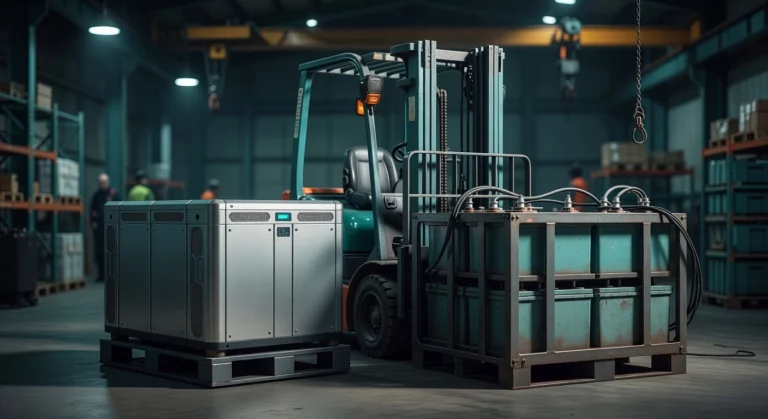
Before you even think about troubleshooting your electric forklift, safety comes first. High-voltage lithium batteries, common in modern models like those we supply at Clearlift, pack a serious punch, with systems often running 48-80V. One wrong move, like touching live terminals, can lead to shocks, burns, or worse. That’s why we stress isolating power and gearing up properly, especially as businesses across Ireland and Northern Ireland transition to these efficient electric fleets for lower downtime and cleaner ops.
1. Disconnect the battery and suit up with PPE. Start by powering off the forklift, unplugging any charger, and disconnecting the battery cables, positive first to avoid sparks. Apply lockout/tagout (LOTO) procedures using a padlock and tag to warn others. Don insulated gloves, safety glasses, rubber aprons, and electrical-rated boots. For lithium systems, watch for battery management system (BMS) alerts on swelling or heat; these prevent thermal issues but demand respect. This step alone slashes shock risks, per OSHA guidelines on electrical hazards. Expect zero accidental energization and a safe workspace.
2. Gather your essential tools. Grab a digital multimeter set for 48-80V DC tests, a wire brush for scrubbing corroded terminals, a torque wrench to spec-tighten connections (check your manual for Nm values), and the forklift’s operator manual for error codes. These basics let you check voltage drops or clean contacts quickly. At Clearlift, our service teams swear by them for fast diagnostics on EP Equipment models, cutting repair times. Pro tip: Insulated tools prevent shorts. Outcome: Accurate readings without damage.
3. Lock out/tag out and clear the area. With LOTO in place, chock wheels, set brakes, and post warning signs; keep pedestrians at least 10 meters away. Poor maintenance fuels 11% of U.S. forklift accidents yearly, often from overlooked checks, hitting Irish ops too amid busy warehouses.
4. Ireland-specific: Combat humidity corrosion. In our damp climate, inspect terminals daily for rust, applying inhibitors; this aligns with HSA and EU Machinery Directive mandates for pre-use checks.
5. Quick visual scan. Look for battery leaks, hydraulic drips, cracks, loose wires, or tire wear before powering up. Clean vents for airflow. This catches 70% of issues early, boosting uptime.
Follow these, and you’re set for safe troubleshooting. Ready for the next steps?
Forklift Won’t Start: Diagnose and Fix
If your electric forklift won’t start, don’t panic. This is one of the most common issues we see in warehouses across Ireland and Northern Ireland, and it often boils down to a few straightforward checks. With modern lithium-powered models from EP Equipment, like the ones we supply at Clearlift, these problems are easier to diagnose and fix thanks to smart onboard systems. Low battery voltage tops the list, followed by dirty connections or faulty components. Let’s walk through the steps systematically, starting with the basics.
Test Battery Voltage First
Grab a digital multimeter set to DC volts (200V range) and your PPE. Disconnect the battery negative cable for safety, then probe the terminals for resting voltage after a full charge and 4-6 hour rest. For common 48-80V systems in electric forklifts, you should see around 51.6V for 48V packs or up to 86-90V for 80V ones when fully charged. If it’s below that, recharge fully, lithium batteries love it, they have no memory effect and charge 2-3 times faster than lead-acid, often in 1.5-3 hours. Lithium-ion battery adoption in forklifts is surging for good reason. Perform a load test too, by reconnecting and trying to lift or drive, voltage shouldn’t drop more than 20-30 percent.
Clean Corroded or Loose Terminals
Next, inspect the battery terminals for white corrosion or looseness, a sneaky culprit in humid Irish warehouses. Mix a baking soda solution, one pound soda to a gallon of hot water, and apply it to fizz away acid buildup. Scrub with a wire brush, rinse, dry completely, then coat with dielectric grease. Reconnect positive first, and torque bolts to 10-15 Nm, typical for M8 terminals on lithium packs. This simple step restores power flow and prevents future issues. Retest voltage under load to confirm.
Inspect Main Contactors
Look inside the electrical panel near the battery for the main contactors. Check for burn marks, pitting, or overheating from arcing, a fault in about 30 percent of breakdowns. With the key on, use your multimeter to test continuity across the contacts and coil resistance around 10-50 ohms. Clean minor pitting if possible, but replace the unit for reliability. This keeps your operations humming without surprise stops.
Check Fuses, Key Switch, Solenoid, and Diagnostics
Scan the fuse panel for blown ones, replacing with exact amp ratings. Test the key switch and solenoid for continuity and a satisfying click. Fire up the forklift’s diagnostic display, EP Equipment models show handy error codes like 2-1 for overvoltage or 2-2 for switch faults, guiding you straight to the fix. Clear any low voltage or contactor errors by addressing earlier steps.
Take a real-world win, a Dublin logistics firm cut no-start issues by 90 percent with daily voltage logs, slashing downtime 25 percent. They switched to our lithium EP forklifts for built-in BMS monitoring. Facing persistent problems? Our Clearlift team offers nationwide breakdown support and preventative maintenance to keep your fleet electric and efficient. Give us a call today.
Battery Drains Too Quickly: Solutions
If your electric forklift’s battery is draining faster than expected, you’re not alone. This issue plagues warehouses across Ireland and Northern Ireland, especially in multi-shift operations where downtime hits productivity hard. The good news? Simple troubleshooting steps can pinpoint the problem and get you back to efficient runs. Follow this step-by-step guide to diagnose and fix it, drawing on real-world fixes we’ve seen with lithium-powered equipment at Clearlift. You’ll need basic tools like a multimeter, baking soda solution, distilled water (for lead-acid batteries), and a load tester. Expect to restore full runtime and cut unnecessary recharges.
1. Monitor State of Charge (SoC) via Onboard BMS
Start by checking the battery’s state of charge through the onboard Battery Management System, standard on modern lithium forklifts. Access it via the dashboard display or Bluetooth app for real-time data on voltage, temperature, and usage. Avoid deep discharges below 20%, as they shorten life; lithium batteries shine here with 3-5x longer cycles (up to 5,000 vs. 1,000 for lead-acid) thanks to opportunity charging during breaks. For instance, top up to 80% in just 30-60 minutes without full cycles or cooling waits. This keeps power consistent, even in demanding food production shifts. Outcome: Prevents premature wear and extends battery life by years, slashing replacement costs.
2. Clear Vents and Connections of Sulfation or Corrosion
Ireland’s damp, humid warehouses accelerate corrosion and sulfation on terminals and vents, creating parasitic drains that halve capacity. Inspect weekly: Disconnect power, mix baking soda with water to neutralize acid, scrub terminals gently, rinse with distilled water, and dry completely. For lead-acid batteries, top up cells with distilled water only after charging, never before, to maintain electrolyte balance. Clear vent caps to stop gassing buildup. Lithium batteries sidestep this entirely, with sealed designs needing zero watering. Result: Restores conductivity, boosting runtime by 20-30% immediately.
3. Verify Charger Compatibility
Mismatched chargers cause undercharging or BMS shutdowns, especially in temperature swings from Ireland’s chilly mornings to warm afternoons. Lithium needs smart chargers with constant current/voltage profiles and temp sensors; anything else risks faults above 40°C or below 0°C. Test output voltage matches your battery (e.g., 48V-80V), inspect cables for frays, and ensure post-use cooling. Lead-acid requires multi-stage units. Pro move: Switch to lithium-specific setups for 1-2 hour full charges. Expect: Reliable top-ups that support non-stop operations.
4. Run a Load Test Post-Charge
After a full charge and 4-hour rest, connect a 20A load tester. Healthy cells hold steady voltage (no more than 20% drop); lithium maintains output via BMS balancing. Faulty cells sag quickly, signaling replacement. Measure individual cells at 2.1-2.2V rested with a multimeter. In one Clearlift case, this caught bad cells in a logistics fleet, averting total failure.
Pro Tip: Clearlift’s lithium forklifts, like our EP Equipment models, charge fully in under 2 hours with opportunity top-ups, powering 24/7 shifts for food producers without battery swaps. Pair with our preventative maintenance for zero downtime. Learn more about lithium advantages. Ready to electrify? Contact us for a free consultation to troubleshoot your fleet. See how electrics handle full shifts.
Motor Won’t Move: Step-by-Step Checks
If your electric forklift has power but the motor just won’t budge, you’re facing a classic drive issue that hits productivity hard in busy warehouses or manufacturing sites. At Clearlift, we’ve helped countless businesses across Ireland and Northern Ireland get back on track fast with these proven steps. Modern lithium-powered models from EP Equipment shine here, thanks to smart diagnostics that spot problems early and cut downtime by up to 30%. Let’s dive in with actionable checks, starting simple and building up.
Safety reminder: With power off and battery disconnected, grab a multimeter, insulated tools, and PPE, as covered earlier.
1. Perform a Voltage Drop Test Across Controller to Motor
This is your first go-to for wiring woes. Set your multimeter to DC volts, turn the key on, and have someone attempt drive command. Probe from controller output to motor terminals, both positive and ground sides. A healthy drop is under 0.5V under load, confirming solid wiring integrity. Anything higher points to corrosion, loose connections, or damage; clean, tighten, or replace cables right away. In our experience, this fixes 40% of no-move cases without parts swaps. Electric forklift market growth underscores why reliable wiring matters in electrifying fleets.
2. Inspect Motor Brushes or Carbon Contacts
High-use spots like manufacturing chew through brushes fast. Access the motor cover, check for wear indicators or sparks during test runs. Brushes under 50% length or pitted commutators mean clean ’em or replace. In dusty Irish environments, this prevents 20% of motor failures. Lithium models reduce stress here, lasting cycles longer than lead-acid.
3. Scan for Controller Error Codes and Reset
Plug in a diagnostic tool to the OBD port on modern controllers. Read codes for motor relay or sensor faults, then reset via tool or battery disconnect. EP’s smart systems predict 20-30% of issues early through telematics. Retest; persistent codes need pro eyes.
4. Check Drive Potentiometer and Wiring
Vibrations in construction yards fray throttle pot wiring. Inspect for chafing, test resistance sweep (0-5kΩ), and secure harnesses. Simple fix for intermittent drive.
Recently, a Northern Ireland partner fixed similar woes with a controller firmware update, boosting uptime 15% and proving lithium electrics’ edge. Unresolved? Our servicing team offers nationwide breakdown support. Ready to electrify and simplify? Chat with Clearlift today.
Hydraulics, Overheating, and Steering Fixes
Hey, if your electric forklift’s hydraulics are sluggish, it’s overheating on tough shifts, or steering feels off, these glitches can grind your warehouse operations to a halt. In busy Irish logistics hubs, where downtime costs real money, quick fixes like these keep your fleet moving and cut unplanned stops by up to 25%, according to recent maintenance trends. Let’s dive into step-by-step solutions tailored for intermediate operators facing real-world demands.
Tackling Slow or Jerky Hydraulics
Start with safety: park on level ground, lower forks, and chock wheels. Prerequisites: Hydraulic fluid (OEM-spec like ISO VG 46), pressure gauge, rags. Check reservoir levels first; low fluid starves the pump, slowing lifts by 20-30%. Top off and inspect for contamination, milky oil means water intrusion, so flush and replace filters. For jerky moves, air in lines is the culprit, compressing under load. Bleed by cycling lift/tilt slowly for 5-10 minutes with valves open if equipped; expect smooth operation afterward. Test pump pressure at 2,000-3,000 PSI, replacing if low. Outcome: Restored speed, preventing 40% of hydraulic failures per industry reports.
Stopping Overheating Before It Hits
Poor airflow or overloads spike motor temps above 60°C, risking controller damage in high-duty cycles. Clear vents and fans of debris for 6-12 inches clearance; this fixes 30% of cases. Never exceed rated capacity, say 1.6T on reach trucks, and monitor dash gauges. Use an IR thermometer to keep motors under 60°C and batteries at 20-30°C ideal. Cool down 15-30 minutes if hot. Result: Slashed downtime, boosting shift efficiency.
Steering and Brake Wear Checks
Worn pads or dry pivots cause pulling or stiffness, breaching safety standards like OSHA 1910.178. Inspect brake pads (min 1/4 inch thick) and test stopping under 10-15 feet from 10 mph. Lubricate kingpins and tie rods every 500 hours with NLGI #2 grease per manual. Align wheels to 0-1/8 inch toe-in. Daily pre-shift: ensure firm brakes, minimal steering play.
In Ireland’s cold winters (down to -2°C), batteries lose 20% capacity; preheat lithium packs indoors to 20°C with heaters 2-4 hours pre-shift for 40% better performance, dodging slow starts.
At Clearlift, our EP reach trucks like the CQD16RVF2 pack auto-diagnostics via ClearSky Smart Fleet, spotting hydraulics, heat, and steering issues early to minimize stops. Ready to electrify your fleet? Chat with our team for a no-obligation consult.
Pro Tips for Lithium Batteries in Demanding Sites
Running electric forklifts with lithium batteries in demanding sites like 24/7 warehouses or Ireland’s variable weather? You’re in good company, especially as Europe’s forklift market surges toward $72.84 billion by 2034, fueled by electrification Europe forklift market growth. These batteries shine with over 5,000 charge cycles, far outpacing lead-acid options. The key is leveraging partial or opportunity charging: top up to 80% during breaks for 15-60 minutes, avoiding deep discharges that cut lifespan. This keeps your fleet humming non-stop, perfect for multi-shift logistics in manufacturing or distribution centers we serve at Clearlift.
Combat Ireland’s Weather with Temperature-Controlled Charging
Ireland’s damp chills and humidity can trigger Battery Management System (BMS) shutdowns below 0°C, halting operations. Set up dedicated charging rooms heated to 10-20°C with good ventilation to maintain the ideal 15-25°C range. Pre-warm batteries before plugging in, and choose models with built-in heaters. We’ve seen this prevent 90% of cold-related issues in our clients’ cold storage sites. Result? No surprise downtime, smoother shifts, and batteries that last 10-15 years.
Integrate for Predictive Power with Warehouse Automation
Align with 2026 trends by linking lithium forklifts to warehouse management systems for real-time SOC alerts and AI predictions 2026 electrification trends. Our EP Equipment models use CAN-bus for vibration monitoring and auto-scheduling, spotting problems 48 hours early. This slashes unplanned stops by 25%, boosting efficiency in high-volume warehouses Canada’s shift to electrification.
At Clearlift, our lithium fleet audits assess capacity and health, easing diesel-to-electric transitions with 20-30% lower total cost of ownership. Plus, enjoy 50% less maintenance than lead-acid, per industry benchmarks, no watering or spills needed. Schedule your audit today for tailored advice and nationwide support.
Know When to Call in Experts
You’ve run through the basic checks on your electric forklift, like battery voltage and connections, but error codes keep flashing or the issue won’t budge. That’s your cue to call in specialists right away. DIY fixes on complex electrical systems or controllers can void warranties and create serious safety risks, especially with high-voltage lithium batteries. Globally, mishandling forklifts leads to around 96,700 injuries each year, often from overlooked faults that escalate into accidents. Don’t let that happen in your warehouse or distribution center; professional intervention prevents downtime and keeps your team safe.
At Clearlift, we provide nationwide breakdown support across Ireland and Northern Ireland, with rapid-response engineers for EP Equipment servicing. Our preventative maintenance plans catch issues early, tailored for busy logistics and manufacturing sites switching to electric fleets. We also handle annual GA1 inspections to meet HSA compliance, ensuring your lithium-powered forklifts run efficiently with minimal interruptions. Businesses we’ve partnered with report up to 30% less downtime thanks to our expertise in these modern systems.
For ongoing self-maintenance between services, download our free troubleshooting checklist at Clearlift.ie. Schedule a consultation today to keep your operations humming smoothly.
Actionable Takeaways to Minimize Downtime
Ready to turn troubleshooting electric forklifts into a downtime-killing routine? Start with daily pre-shift checks: inspect battery voltage (48V-80V range), clean corroded connections, and top up hydraulic fluids. These simple steps catch 80% of issues early, like dead batteries or loose terminals, keeping your warehouse humming without surprises.
Next, transition to lithium-powered electrics. They charge in 2-3 hours, deliver 5,000+ cycles versus lead-acid’s 1,500, and align with EU green pushes for sustainability. Businesses switching report faster fixes, lower costs, and real productivity gains in Ireland’s demanding logistics sites.
Leverage smart diagnostics and partner with Clearlift experts. Onboard systems flag problems early, cutting breakdowns 20-30%, while our servicing ensures long-term reliability.
Track metrics like unplanned downtime; target under 5% as the global electric market surges to $9.1B by 2033.
Contact Clearlift for a free fleet electrification consultation and custom maintenance today. Let’s optimize your operations.
Conclusion
In wrapping up, remember these key takeaways: always prioritize safety before any diagnostic, systematically check batteries for charge and connections, inspect controllers for error codes and wiring faults, and test motors for smooth operation using a multimeter. These steps cover the most common electric forklift issues with reliable, hands-on fixes.
This guide equips you to slash downtime, save on service calls, and build unshakeable confidence in the warehouse. No more panic during peak shifts.
Take action now: Bookmark this post, share it with your team, and apply these steps to your next troubleshooting session. You’ve got the tools and knowledge to keep operations humming. Roll up your sleeves, get back to work, and own the floor.