In warehouses across Ireland and Northern Ireland, one concern comes up again and again when we talk about automation:
“If we invest in an automated pallet warehouse, will our people lose their jobs?”
It’s an understandable fear. Automation, robotics and AI are often framed as a threat to human work. But when you look at how automated pallet warehouses actually operate in real facilities, the story is very different.
In this article, we’ll unpack what an automated pallet warehouse really is, where automated pallet trucks and pallet movers fit in, and why the right automation doesn’t replace your team – it removes the boring, repetitive work so your people can do more valuable, safer and more satisfying jobs.
We’ll also look at how EP Equipment solutions like the EXP15 automatic pallet truck and XP15 AMR help you build an automated pallet warehouse step by step, without tearing up your existing operation. (Clearlift Material Handling)
What Is an Automated Pallet Warehouse?
An automated pallet warehouse is a warehouse or distribution centre where pallet handling – storage, retrieval and movement – is supported or driven by automated systems.
These systems can include:
- Automated storage and retrieval systems (AS/RS) with stacker cranes and high-bay racking
- Shuttles and conveyors that move pallets between storage, picking and dispatch
- Automated pallet movers and pallet trucks that transport pallets autonomously on the ground
- Warehouse management systems (WMS) that orchestrate inventory and material flow.
In other words, an automated pallet warehouse isn’t one single machine – it’s a combination of storage, movement and software that reduces manual pallet handling and makes better use of space, time and labour.
For many Irish operations, the fastest and most accessible way to move towards an automated pallet warehouse is not by installing a full high-bay AS/RS from day one, but by automating pallet transport inside the building using smart pallet trucks and AMRs.
That’s exactly where Clearlift’s automation offering is focused, through our warehouse automation solutions.
Where Automated Pallet Trucks Fit in an Automated Pallet Warehouse
Think about the amount of time your team spends every day simply moving pallets from A to B:
- From goods-in to a storage location
- From storage to production lines for parts feed and kitting
- From production to the finished goods warehouse
- From warehouse to outbound and loading bays
- From work areas to waste and empty pallet zones
In most warehouses, these are the journeys that silently consume hours of labour and thousands of steps per shift. They don’t require specialist skills; they just require time, energy and compliance with safety rules.
An automated pallet warehouse uses smart pallet trucks and automated pallet movers to do this internal transport work:
- A task is created (for example: “Move pallet from inbound dock 3 to racking zone A”).
- The automated pallet truck picks up the load and follows a mapped path through the warehouse.
- Sensors and LiDAR allow it to navigate safely among people, forklifts and other equipment. (Clearlift Material Handling)
- Your team monitor and manage the flow instead of doing the walking and pulling.
At Clearlift Material Handling, this is enabled by solutions like:
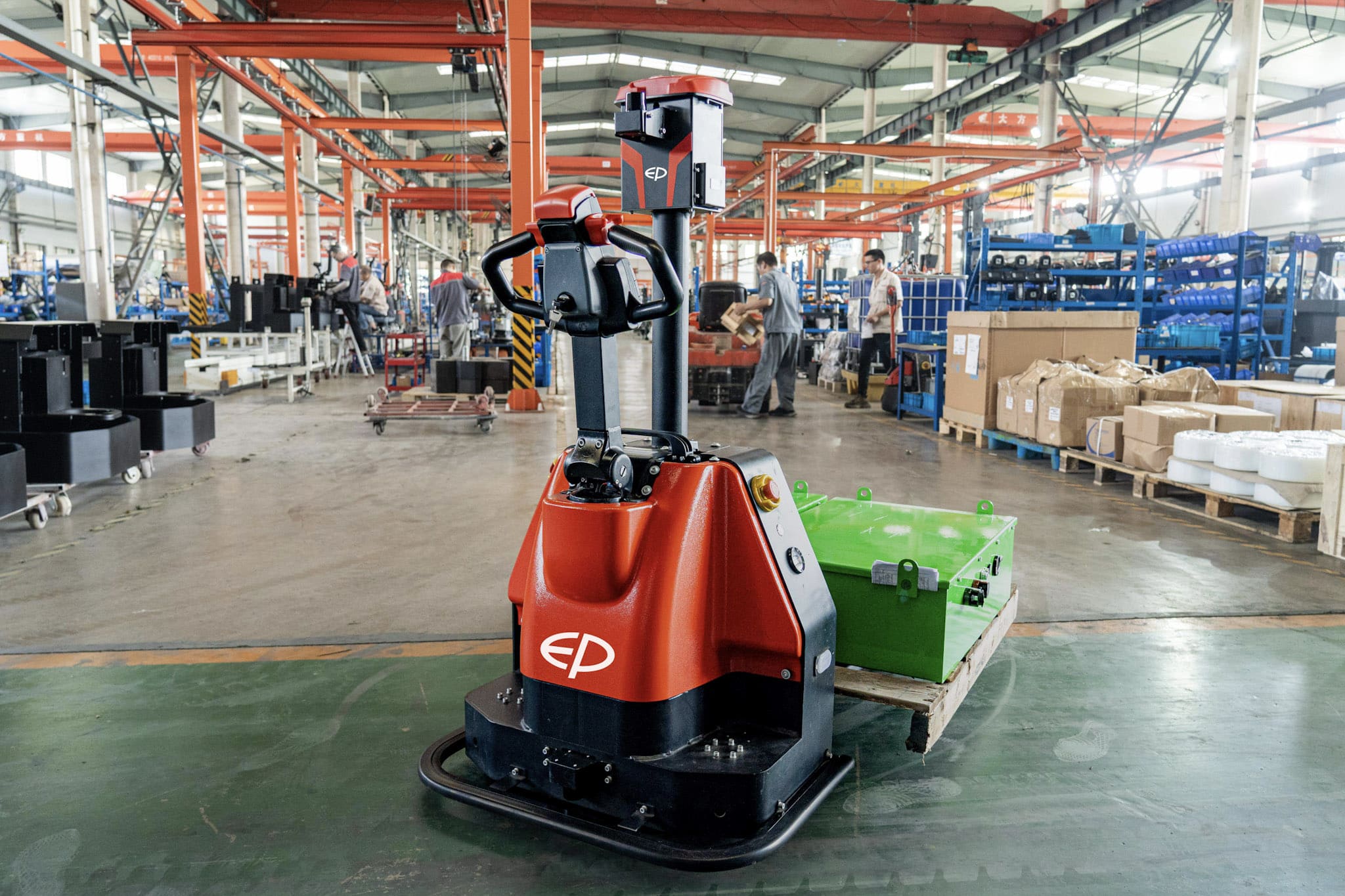
- The EXP15 automatic pallet truck – the world’s first automatic pallet truck, designed as an accessible entry point into warehouse automation with simple setup, five-button operation and no requirement for complex IT infrastructure.
- The XP15 AMR autonomous mobile robot, which can work as both an electric pallet truck and an AMR, with a plug-in lithium battery system for maximum uptime.
Instead of building a fully automated facility from scratch, you transform your existing warehouse into an automated pallet warehouse one route at a time.
The Biggest Myth: “Automation Will Replace Our Jobs”
The biggest emotional barrier to automation is clear:
“If we automate pallet transport, what happens to the people currently doing that work?”
Let’s be honest about what those jobs often look like today.
The Reality of Manual Pallet Handling
In a traditional warehouse, operators can spend much of their shift:
- Walking the same fixed routes dozens of times per day
- Moving pallet after pallet with a manual or electric pallet truck
- Repeating the same basic task: pick up, travel, drop, return empty
- Working in awkward postures, tight spaces and mixed-traffic aisles
- Feeling pressure to move faster to keep up with demand
These tasks are necessary; but they’re not where your team creates the most value.
They are repetitive, physically demanding and mentally numbing. Over time, they contribute to fatigue, higher risk of musculoskeletal injuries and burnout.
What Automation Actually Replaces
An automated pallet warehouse doesn’t replace:
- Your best supervisors
- Your most experienced forklift drivers
- Your team’s practical knowledge of the business
What it replaces is monotony:
- The endless pallet shuttling that adds no strategic value
- The low-skill, high-fatigue tasks that cause injuries and staff turnover
- The time spent walking instead of managing, improving and serving customers
When a smart pallet truck like the EXP15 or XP15 takes over this repetitive movement, your people are freed to do work that genuinely moves the needle.
What Work Looks Like in an Automated Pallet Warehouse
To understand this clearly, it helps to compare “before” and “after”.
Before Automation: Human Treadmills
In a manual pallet warehouse:
- Operators spend a large percentage of their time simply acting as the engine for pallet transport.
- Supervisors are constantly firefighting bottlenecks: a delayed pallet here, a missing pallet there.
- Health & safety teams are fighting an uphill battle against overexertion, slips, trips and collisions.
The result: throughput is limited by human stamina and availability. When demand spikes, pressure and overtime mount.
After Automation: People in Control, Robots in Motion
In an automated pallet warehouse using automated pallet trucks:
- Pallet transport tasks are created and assigned to robots, not people.
- Staff work in roles like flow controller, exception handler, quality checker, inventory lead, etc.
- Operators use manual or electric pallet trucks where they add value; not just to act as “powered legs”.
- Supervisors manage data and priorities, not constant manual intervention.
The result:
- Human effort is focused on quality, problem-solving and customer service.
- Robots handle the heavy, repetitive movement ; consistently, safely and without fatigue.
Far from replacing jobs, an automated pallet warehouse changes the nature of work into something safer, more skilled and more sustainable.
Seven Ways Automated Pallet Warehouses Create Better Jobs and Stronger Businesses
Let’s break down how automation changes things in practice.
1. Less Physical Strain, Fewer Injuries
Automation reduces the amount of manual handling of heavy loads and repetitive pushing/pulling, which are major risk factors for workplace injuries in logistics.
By letting automated pallet movers handle long-distance and repetitive routes, you:
- Cut fatigue and strain over a shift
- Reduce time off due to injuries
- Improve long-term health outcomes for your team
This isn’t just good for people – it’s good for cost control and productivity.
2. Higher Throughput Without Overworking Staff
Automated pallet warehouse systems can move pallets:
- At consistent speeds
- For longer periods
- With fewer errors and delays
Machines don’t get tired, distracted or stressed. That means you can handle more volume with the same headcount, without asking people to work longer or harder.
3. More Skilled, Future-Proof Roles
As automation takes over low-skill tasks, new roles emerge:
- Automation coordinator – managing routes, priorities and robot tasks
- Data-driven supervisor – using dashboards to tune flow and capacity
- Process improvement lead – spotting bottlenecks and optimising layout
- Technical operator – handling basic troubleshooting and first-line support
Instead of fearing replacement, your team gains upskilling and career progression opportunities.
4. More Predictable Operations, Less Firefighting
With automated pallet handling:
- Pallet movements are tracked and logged
- Delays and exceptions are visible quickly
- You can simulate and plan for peak periods
This turns day-to-day management from constant firefighting into structured, data-led decision making.
5. Better Recruitment and Retention
It is increasingly difficult to recruit people into roles that are:
- Highly repetitive
- Physically demanding
- Perceived as “old-fashioned”
By moving towards an automated pallet warehouse, you create modern, technology-supported roles that are more attractive to new talent and more sustainable for existing staff.
6. Stronger Customer Service and Reliability
Less time spent pushing pallet trucks = more time to:
- Check orders and loads carefully
- Resolve issues before they reach the customer
- Maintain high service levels even when volumes spike
Automation supports consistency and reliability, which your customers will notice.
7. Capacity for Growth Without Linear Headcount Increases
Perhaps most importantly, an automated pallet warehouse model lets you grow throughput without adding the same proportion of labour each time.
You can scale:
- The number of routes automated
- The operating hours of your automated pallet trucks
- The integration with wider systems
…all while keeping your core team focused on high-value work.
EXP15 & XP15: Automation Designed for Real Warehouses
Many warehouse teams are interested in automation but worried it will be:
- Too complex
- Too disruptive
- Too expensive
EP Equipment’s EXP15 and XP15 were designed to solve exactly those concerns – and Clearlift brings them to warehouses across Ireland and Northern Ireland as part of our automation offering.
EXP15: The World’s First Automatic Pallet Truck
Key characteristics of the EXP15 automatic pallet truck include:
- Simple Operation – Five buttons, learnable in minutes; no robotics expertise required
- Simple Setup – No Wi-Fi or complex IT systems; paths up to 50m using reflectors
- Simple Service – Maintained much like a standard electric pallet truck
- Affordability – An accessible price point for businesses taking their first step into automation
- Safety Features – LiDAR, fork-tip sensors, emergency stop and precise positioning
EXP15 is ideal if you want to automate fixed, repetitive pallet routes but don’t want the complexity of a full AS/RS system.
XP15: AMR and Electric Pallet Truck in One
The XP15 AMR goes a step further by combining:
- Manual mode – Operates as an electric pallet truck when needed
- Automatic mode – Functions as an AMR for autonomous pallet movement
- Plug-in 24V/60Ah Li-ion battery – Fast swaps for high uptime
- Flexible deployment – Can be introduced into different workflows as your automation strategy grows
Together, these technologies allow you to build an automated pallet warehouse that fits your current building, rather than forcing you into a complete redesign.
How to Start Turning Your Site into an Automated Pallet Warehouse
You don’t have to transform everything at once. In fact, the best projects start small and scale.
Step 1: Map Your Repetitive Pallet Flows
Identify where your people are acting as “human transport systems”:
- Inbound → storage
- Storage → production lines
- Production → finished goods warehouse
- Warehouse → outbound
- Internal waste and empty pallet runs
This is where automated pallet movers give you the fastest return.
For more background, see our article on automated pallet movers and their role in efficient warehousing.
Step 2: Choose One Route to Automate First
Pick a route that is:
- High-volume
- Repetitive
- Relatively simple in terms of layout and traffic
Implement an EXP15 or XP15 on that route, while keeping manual options available during the transition.
Step 3: Measure the Impact
Track metrics such as:
- Walking distance and time saved for staff
- Number of pallets moved per shift
- Reduction in overtime or agency labour
- Feedback from operators on fatigue and workload
These data points will form the business case for scaling your automated pallet warehouse further.
Step 4: Scale to Additional Routes and Shifts
Once your first route is stable and accepted by the team, extend automation to:
- Additional pallet flows
- More shifts (evening, night, weekend)
- Different zones of the warehouse
You’ll quickly see how automation can integrate with your electric pallet trucks and forklifts to create a complete, modern fleet. Explore our pallet truck range to see how automation and electrification fit together.
Step 5: Align Automation with Your Sector Needs
Different industries (food & beverage, logistics, manufacturing) have different patterns of pallet movement and hygiene/safety demands.
To see how we tailor solutions for logistics and distribution, visit our page on forklifts and automation for logistics operators.
Frequently Asked Questions About Automated Pallet Warehouses
1. What exactly is an automated pallet warehouse?
An automated pallet warehouse is a warehouse where pallet storage, retrieval and movement are supported by automated systems such as AS/RS, shuttles, conveyors and automated pallet trucks/AMRs. The goal is to reduce manual pallet handling, increase throughput and make better use of space and labour.
2. Does an automated pallet warehouse mean cutting staff?
Not necessarily – and in many projects, headcount stays stable while productivity increases.
Automation typically removes the most repetitive, physically demanding tasks and allows staff to move into roles focused on quality, coordination, and improvement. In markets with labour shortages, automation helps you do more with the team you already have, rather than constantly recruiting.
3. Is this only for large, high-bay warehouses?
No. While many examples online focus on large AS/RS projects, automated pallet warehouses can start with on-the-ground automation using smart pallet trucks and AMRs.
Solutions like the EXP15 and XP15 are specifically designed to be accessible for small and mid-sized operations, with simple setup and minimal infrastructure requirements.
4. How expensive is it to start automating pallet handling?
Cost depends on your site layout, number of units and scope. However, entry-level automatic pallet trucks are priced to offer a practical ROI within a relatively short period, due to savings in labour hours, reduced overtime, fewer injuries and higher throughput.
A Clearlift site assessment can help estimate payback based on your actual pallet flows and staffing.
5. What’s the difference between automated pallet trucks and full AS/RS systems?
- Automated pallet trucks / AMRs
- Operate on the warehouse floor
- Ideal for automating internal transport routes
- Minimal building changes, scalable in small steps
- AS/RS automated pallet warehouses
- Involve high-bay racking, stacker cranes and complex integration
- Usually require significant capex and building adaptation
Many companies will start with automated pallet trucks and later integrate other technologies as their automation strategy matures.
Ready to Explore What an Automated Pallet Warehouse Could Look Like for You?
Automation doesn’t have to be a threat to your team or a leap into the unknown.
With the right approach, an automated pallet warehouse is simply a warehouse where:
- People do safer, more meaningful work
- Repetitive pallet transport is handled by reliable, smart machines
- Throughput, safety and customer service all move in the right direction
At Clearlift, we specialise in helping Irish and Northern Irish businesses take that first step with automated pallet movers and smart pallet trucks, backed by local support and proven EP Equipment technology.
If you’d like to understand what automation could mean for your site – without the hype or hard sell – get in touch with our team for a practical, data-led assessment of your pallet flows.